EN


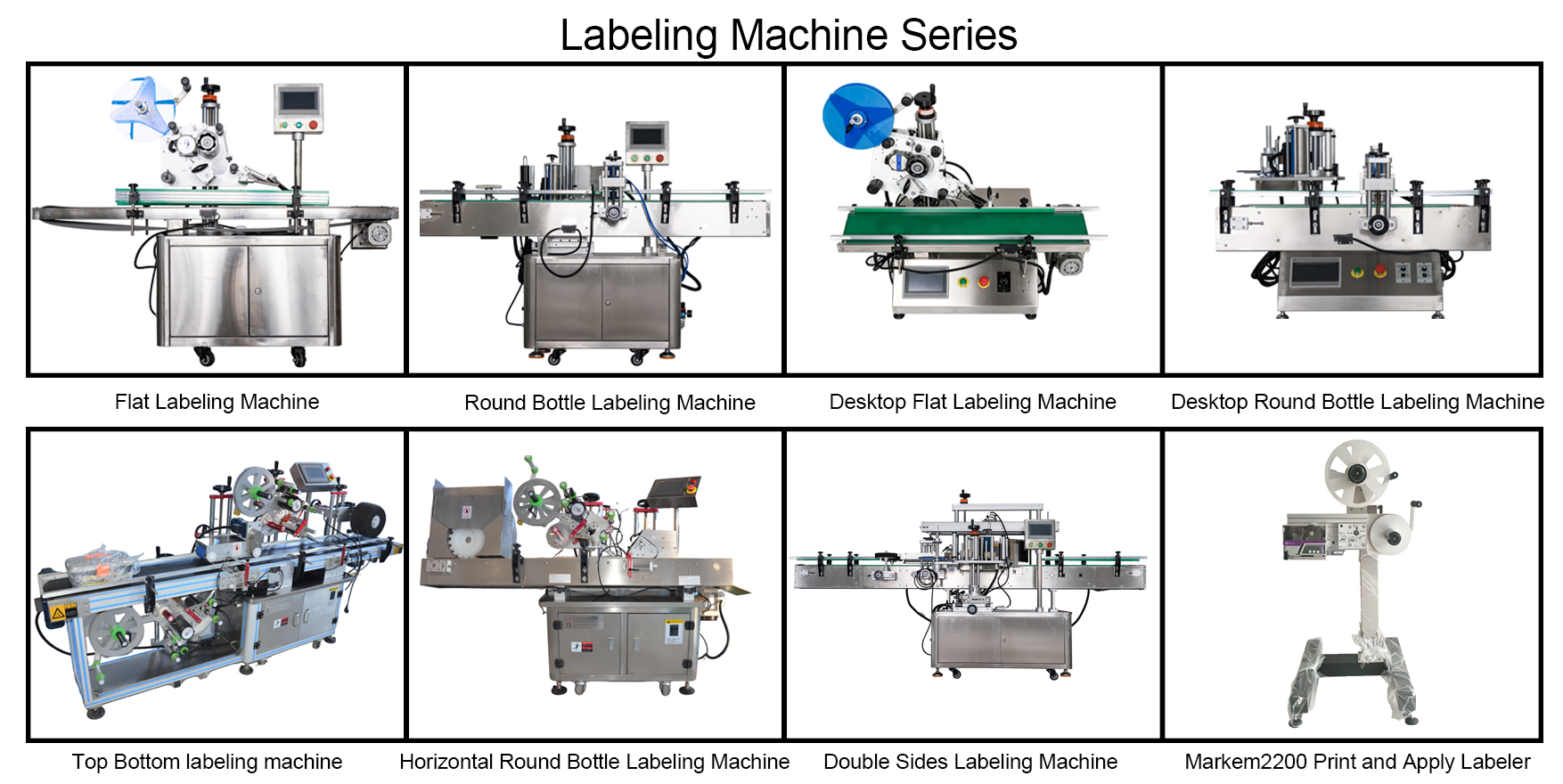
Automatic Flat Surface Labeling Machine Desktop Plane Sticker Applicator For Box Bottle Bag Top Label Printing
The fully automatic upper and lower flat labeling machine is an efficient and precise automated labeling equipment, widely used in the packaging process of many industries such as food, medicine, electronics, cosmetics, hardware, etc. It is mainly used to simultaneously or separately label the upper and lower surfaces of various products, meeting various purposes such as product identification, traceability, anti-counterfeiting, and promotion.
Description
Automatic Top Labeling Machine for Cartons, Boxes and Pouches
This automatic top labeling machine applies self-adhesive labels to the upper surface of cartons, boxes, trays, pouches, bags and plastic boxes at a standard speed of 30–50 pieces per minute, with a placement accuracy of about ±1.5 mm. It is built for manufacturers and contract packers who need a repeatable label position on flat or low-profile products without adding manual handling to the line. Every unit is configured around your product dimensions, label size, label material and existing line layout, and is supplied factory-direct with OEM customization. Send us your product details and our engineers will recommend a configuration, confirm the specification in writing and quote.
What This Automatic Top Labeling Machine Does
An automatic top labeling machine automates one specific job: taking a pressure-sensitive label off a roll and placing it accurately on the upper face of a product as that product travels along a conveyor. That single task replaces a manual operation that is slow, tiring and difficult to staff consistently on a high-volume packing line. On this machine the label position is held by mechanical registration and sensor timing rather than by operator judgement, so every carton, box or pouch leaves the station with the label in the same place, at the same angle and at the same distance from the product edge. Consistency is what makes the label usable downstream: barcodes scan on the first attempt, date codes remain readable, and retail packaging looks uniform across a full production run.
| Model | Flat labeling machine |
| Labeling precision: | +l.5mm (Errors of products and labels are not included.) |
| Labeling speed: | 30-50 pcs/min (related with product label dimensions). |
| Applicable product: | Samples provided by customers. |
| Applicable label: | rolled label provided by customer. |
| Machine dimension: | ±1mm (excluding bottle/label tolerance) |
| Machine Size | 1930x1110x1820mm (lengthxwidthxheight) |
| Power Supply | AC220V, 50Hz |
| Machine Weight | Approx.150kg |
How top surface labeling works
- Infeed. Products are placed on the infeed conveyor, either by hand from a packing station or automatically from an upstream machine through a transfer unit. An adjustable guide rail registers each product against a reference edge, which is what keeps the label position predictable from one item to the next.
- Detection. A photoelectric or fibre-optic sensor detects the leading edge of each product and triggers the labelling cycle at a fixed delay. This delay, combined with conveyor speed, is what converts a moving product into a precisely positioned label.
- Label application. The label web is pulled from the roll and passed over a peel plate. As the web turns, the label separates from its backing and is pressed onto the product by the applicator head, while a drive roller maintains web tension so the label does not skew or wrinkle.
- Press and smoothing. A brush or roller unit presses the label down across its full area, driving out trapped air and improving adhesion on slightly textured board, film or plastic surfaces.
- Discharge. The labelled product is counted and passes either to manual take-off or directly to the next stage of the line.
Where it fits in a packaging line
The machine can operate as a standalone labelling station, which is the usual choice for a single-product operation that only needs the labelling step automated, or it can be integrated inline between an upstream packaging process and downstream equipment such as a checkweigher, inkjet coder, carton sealer or palletizer. In an inline setup the machine is normally mounted over an existing conveyor section, sharing the line's transport rather than adding a separate one. Two figures decide whether that integration works: the conveyor height, because the labelling head must sit at a workable height above the product path, and the available floor space, because the unit needs clearance for the label roll and for operator access during roll changes. If you are upgrading an existing line rather than building a new one, send us those two figures together with your current line speed and we will tell you whether the machine drops in directly or needs a transfer modification.

How to Choose the Right Configuration
Choosing a configuration is mostly a matter of giving us accurate inputs. The list below is the information that lets us commit to a specification rather than a range, and each item removes a variable that would otherwise have to be guessed.
- Product dimensions — length, width and height of the smallest and largest product you intend to label.
- Product weight — the heaviest item on the line, since this drives the conveyor selection.
- Product type and material — rigid carton, flexible pouch, plastic box or tray, and whether the surface is glossy, laminated or plain.
- Label specification — label width, label length, roll core size and label material.
- Required label position — distance from the product edge, and whether the label must avoid existing print such as a batch number.
- Target output — pieces per minute you need to achieve, and how many hours per shift the machine will run.
- Line context — conveyor height, available installation space and operating speed if the machine will be integrated; or "standalone" if it will run on its own.
- Samples — a few physical product samples, or photographs and a short video of the product moving on your existing line.
Send these details and our team will assess the application, confirm whether the standard configuration suits your product and quote accordingly. Where a sample is supplied, we test the handling and label placement before the order is confirmed, so the specification you approve is the one that has been verified against your actual product rather than a description of it.
Multilingual UI

Our company sells complete assembly lines and can customize assembly line products according to your product needs

Frequently Asked Questions (FAQ):
Q:Can this machine apply both full-wrap and half-wrap labels?
A: Yes, it supports both modes. Switching between them is easy and doesn’t require any tool or part changes.
Q:Is it compatible with plastic and glass bottles?
A: Absolutely. It works with PET, plastic, and glass round bottles.
Q:Does it support batch/date/barcode printing?
A: Yes. It can be equipped with hot stamp coder or inkjet printer to print production dates, batch numbers, or barcodes during labeling.
Q:Can this machine be connected to my current production line?
A: Yes. It can run as a standalone machine or be integrated into an existing automated line. Auto feeding and collecting systems are available.
Q:Is the machine easy to operate? Will I need a technician?
A: It's very user-friendly. Operated via touchscreen interface with intuitive settings. Your staff can be trained quickly without technical expertise.
After-Sales Support:
12-Month Warranty:Free replacement for parts with manufacturing defects (excluding consumables)
Lifetime Support:Permanent spare part supply and remote technical assistance
Fast Response: User manual, tutorial videos, and real-time guidance for quick setup and troubleshooting