EN

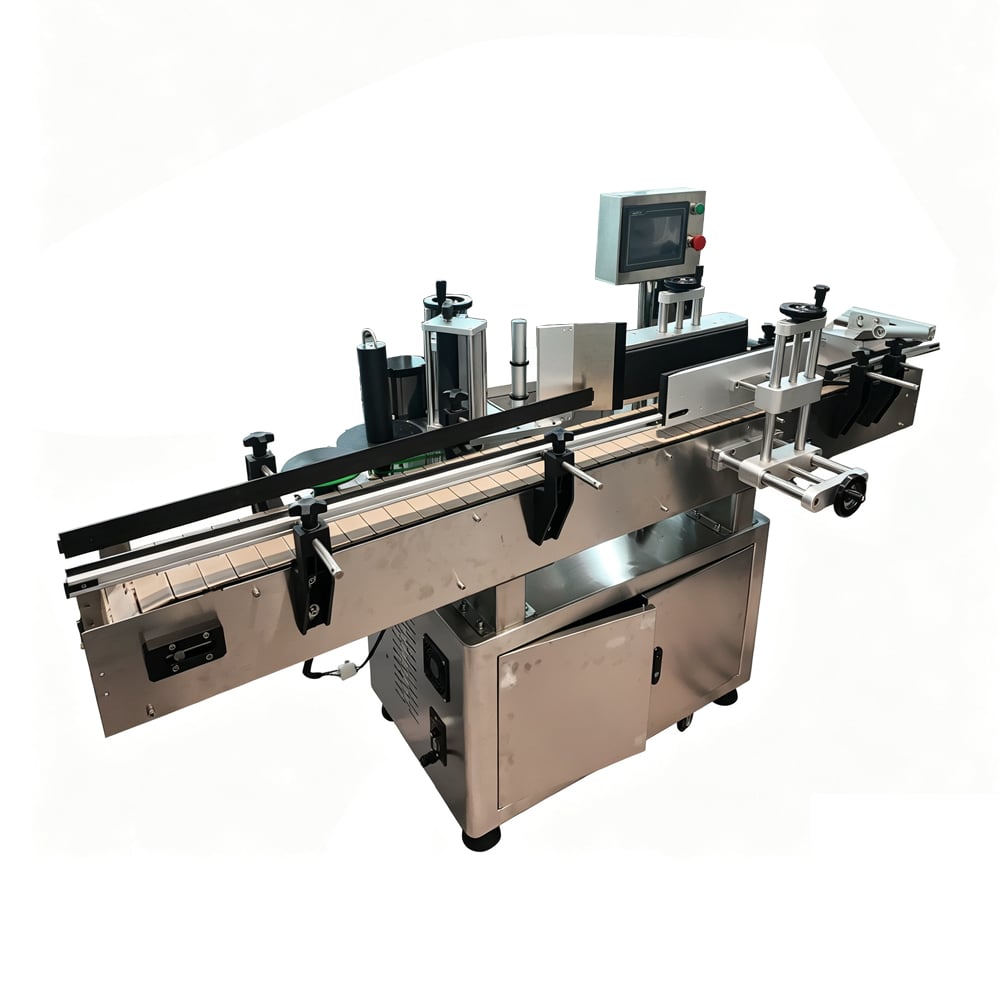
Bottle labeling is an essential process in modern manufacturing and packaging. From bottled water and beverages to cosmetics, pharmaceuticals and household products, accurate labeling helps manufacturers display product information, brand identity, barcodes and other important details.
A bottle labeling machine is designed to automatically apply adhesive labels to bottles with consistent positioning and accuracy. Compared with manual labeling, an automatic bottle labeling machine can improve production efficiency, reduce labor requirements and maintain consistent labeling quality.
But how does a bottle labeling machine actually work? What are its main components, and how does it apply labels to different types of bottles?
In this guide, we will explain the working principle, labeling process, machine components and common applications of automatic bottle labeling equipment.
1. What Is a Bottle Labeling Machine?
A bottle labeling machine is an industrial packaging machine used to apply self-adhesive labels to bottles of different shapes and sizes.
These machines are commonly used in food and beverage, pharmaceutical, cosmetic, chemical and daily chemical industries.
Depending on the bottle shape and labeling requirements, different machines can apply labels to:
Round bottles and cylindrical containers
Flat bottles and rectangular bottles
Square bottles
Glass bottles and plastic bottles
Small cosmetic bottles and large containers
An automatic bottle labeling machine typically works with a conveyor system, a label dispensing mechanism, sensors and an application unit. These components work together to position bottles and apply labels at the correct location.
2. How Does an Automatic Bottle Labeling Machine Work?
The working principle of an automatic bottle labeling machine involves several coordinated steps. Bottles are transported through the machine, detected by sensors, positioned for labeling and then receive labels from an automatic dispensing system.
Here is a breakdown of the main labeling process.
Step 1: Bottle Feeding and Conveying
First, bottles are placed onto the conveyor belt manually or automatically through an upstream production system.
The conveyor transports bottles toward the labeling station at a controlled speed. Guide rails and bottle positioning mechanisms help keep containers aligned during transportation.
A stable feeding process is important because inconsistent bottle spacing or incorrect positioning may affect labeling accuracy.
Step 2: Bottle Detection and Positioning
When a bottle reaches the labeling station, a photoelectric sensor detects its presence and sends a signal to the control system.
The machine then coordinates the labeling operation according to the bottle's position and movement.
For round bottle labeling applications, a positioning mechanism may help rotate or stabilize the bottle to ensure that the label is applied smoothly and accurately.
Step 3: Label Feeding and Dispensing
The labeling machine uses a label roll containing pre-printed or blank self-adhesive labels.
The label roll passes through a series of rollers and tension-control components before reaching the peeling plate.
At the dispensing point, the backing paper changes direction, allowing the adhesive label to separate from the liner.
The label is then delivered to the application position, ready to be attached to the bottle.
Step 4: Label Application
Once the label is dispensed, it is transferred onto the bottle surface.
Different application methods are used depending on the bottle shape and labeling requirements.
For round bottles, the container may rotate against a roller or wrap-around belt to help the label adhere evenly around its surface.
For flat or square bottles, a pressing belt, roller or tamping mechanism may be used to apply the label smoothly.
The application system helps reduce wrinkles, bubbles and label misalignment.
Step 5: Label Pressing and Inspection
After the label is applied, pressing rollers or belts help secure it to the bottle surface.
Some automatic labeling systems also use inspection sensors or vision systems to check label presence, position and quality.
Qualified bottles continue along the production line, while defective products can be identified and rejected if the system includes an appropriate rejection mechanism.
The labeling process is then repeated automatically for the next bottle.
3. What Are the Main Components of a Bottle Labeling Machine?
An automatic bottle labeling machine consists of several important components. Each part plays a role in ensuring stable operation and accurate label application.
Main Component |
Function |
|---|---|
Conveyor System |
Transports bottles through the machine |
Label Roll Holder |
Holds the adhesive label roll |
Label Feeding System |
Controls label feeding and tension |
Peeling Plate |
Separates labels from backing paper |
Photoelectric Sensor |
Detects bottle or label position |
Control System |
Coordinates machine operations |
Label Applicator |
Transfers labels onto bottles |
Pressing Roller |
Helps labels adhere smoothly |
The performance of these components directly affects labeling accuracy, operating stability and production efficiency.
4. Different Types of Bottle Labeling Machines
Not all bottles have the same shape, and different products require different labeling positions. Therefore, manufacturers use different types of labeling equipment depending on their packaging requirements.
4.1 Round Bottle Labeling Machine
A round bottle labeling machine is designed for cylindrical containers such as water bottles, beverage bottles, jars and cosmetic containers.
It applies labels around the curved surface of the bottle. Depending on the machine design, it can apply full-wrap, partial-wrap or positioning labels.
Typical applications: Water bottles, juice bottles, cans, jars and cosmetic containers.
4.2 Flat Bottle Labeling Machine
A flat bottle labeling machine is suitable for containers with flat surfaces, including rectangular bottles, plastic boxes and other flat-sided packaging.
Labels are applied to one or more flat surfaces with controlled positioning.
Typical applications: Shampoo bottles, detergent bottles, cosmetic containers and household product packaging.
4.3 Front and Back Bottle Labeling Machine
This machine applies labels to the front and back sides of a bottle in one production process.
It is commonly used for products that require separate front branding labels and back product information labels.
Typical applications: Beverage bottles, cosmetic bottles, food containers and chemical packaging.
4.4 Top and Bottom Labeling Machine
A top and bottom labeling machine applies labels to the upper and lower surfaces of products or containers.
Depending on the machine configuration, it can also be integrated into packaging lines that handle flat containers and trays.
Typical applications: Food trays, boxes, plastic containers and flat packaging.
5. What Factors Affect Bottle Labeling Accuracy?
Accurate label placement depends on several factors. Even with an automatic labeling system, incorrect machine settings or unsuitable packaging materials may cause labeling problems.
The following factors should be considered:
1. Bottle Shape and Size
Different bottle diameters, heights and surface shapes require suitable labeling mechanisms. Machine adjustments may be necessary when changing product specifications.
2. Label Material and Adhesive
Label thickness, backing paper, adhesive properties and material flexibility can affect label feeding and application.
3. Conveyor Speed
The conveyor speed must match the label dispensing and application speed. Poor synchronization may cause incorrect label positioning.
4. Sensor Positioning
Photoelectric sensors must be correctly positioned and configured to detect bottles reliably.
5. Labeling Machine Settings
Label length, dispensing position, bottle spacing and application pressure should be adjusted according to the actual production requirements.
Proper installation, adjustment and regular maintenance can help improve labeling consistency.
6. Common Problems with Bottle Labeling Machines
During daily operation, bottle labeling machines may experience several common problems.
Problem |
Possible Cause |
Suggested Solution |
|---|---|---|
Label Misalignment |
Incorrect sensor position |
Adjust sensor and label position |
Wrinkled Labels |
Uneven application pressure |
Adjust rollers and application pressure |
Label Peeling |
Unsuitable adhesive or surface |
Check label material and bottle surface |
Missing Labels |
Label feeding interruption |
Inspect label sensor and feeding system |
Inconsistent Position |
Unstable bottle spacing |
Adjust conveyor and positioning system |
Regular inspection of sensors, rollers, label feeding components and conveyor systems can help reduce unexpected downtime.
7. How to Choose the Right Automatic Bottle Labeling Machine?
Before purchasing a bottle labeling machine, manufacturers should evaluate their packaging requirements and production conditions.
Here are some important considerations:
Bottle Shape: Is the container round, flat, square or irregular?
Bottle Dimensions: What are the bottle diameter, height and size range?
Label Requirements: Does the product need one label, two labels or a full-wrap label?
Production Speed: How many bottles need to be labeled per minute or hour?
Label Material: What type of self-adhesive label material will be used?
Production Integration: Does the machine need to work with filling, capping, coding or packaging equipment?
Choosing the right automatic labeling machine can improve production efficiency and help maintain consistent product presentation.
8. Conclusion
A bottle labeling machine works through a coordinated process involving bottle feeding, product detection, label dispensing, label application and final pressing or inspection.
Different labeling machine designs are available for round bottles, flat bottles, square containers and products requiring front-and-back labeling.
Understanding the working principle and main components of automatic bottle labeling equipment helps manufacturers select suitable machines for their packaging lines.
Whether you need a round bottle labeling machine, a flat bottle labeling system or an integrated labeling and coding solution, selecting the right equipment is essential for stable and efficient production.
BestProPak offers industrial labeling machines and coding solutions designed for different bottle shapes, packaging materials and production requirements.
Table of Contents
- 1. What Is a Bottle Labeling Machine?
- 2. How Does an Automatic Bottle Labeling Machine Work?
- 3. What Are the Main Components of a Bottle Labeling Machine?
- 4. Different Types of Bottle Labeling Machines
- 5. What Factors Affect Bottle Labeling Accuracy?
- 6. Common Problems with Bottle Labeling Machines
- 7. How to Choose the Right Automatic Bottle Labeling Machine?
- 8. Conclusion