EN

News
How Does an Automatic Labeling Machine Work?
Automatic labeling machines play an important role in modern packaging and manufacturing. They are designed to apply labels to bottles, jars, boxes, cartons, containers and other products with consistent positioning and speed.
Compared with manual labeling, an automatic labeling machine can reduce repetitive labor, improve production efficiency and help maintain consistent label placement. It is widely used in food and beverage, pharmaceutical, cosmetics, chemical and consumer goods industries.
But how does an automatic labeling machine actually work? What components control the labeling process, and how do manufacturers choose the right equipment?
This guide explains the working principle, main components, labeling steps and common applications of automatic labeling machines.
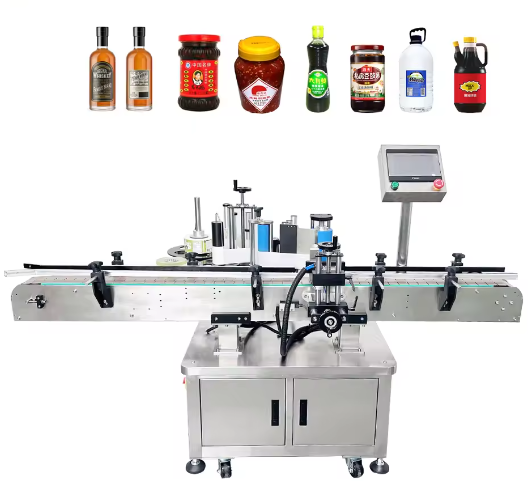
2. How Does an Automatic Labeling Machine Work?
A typical automatic labeling machine uses a conveyor, sensors, a label feeding system and an application mechanism to complete the labeling process.
For a self-adhesive roll-labeling system, the process generally includes five main steps.
Step 1: Product Feeding and Positioning
Products enter the labeling machine through an infeed conveyor. The conveyor transports bottles, boxes or other containers toward the labeling station.
Depending on the product shape and machine configuration, guide rails, separating wheels, positioning belts or other mechanisms may be used to control product spacing and orientation.
Stable product positioning is important because the machine needs to apply each label at the correct location.
For round bottles, a wrap-around labeling machine may use rotating belts or rollers to turn the container during label application. For flat products, side guides or positioning mechanisms help keep the product aligned.
Step 2: Product Detection
When a product reaches the labeling station, a photoelectric sensor or another suitable detection device identifies its position.
The sensor sends a signal to the PLC control system, which coordinates the conveyor, label feeding motor and application mechanism.
The label dispensing process is triggered at the appropriate time according to product position and machine settings.
Accurate product detection helps prevent missing labels and incorrect label positioning.
Step 3: Label Feeding and Separation
The label roll is installed on the unwind holder and threaded through the labeling head.
A drive mechanism pulls the label web forward at a controlled speed. When the label material passes over the peel plate, the backing liner bends away while the individual adhesive label separates from it.
The separated label is then presented at the application point.
A label sensor detects the gap between labels and helps control the feeding length. The backing paper continues toward the rewinding system, where it is collected into a roll.
Stable label feeding and tension control help prevent label misalignment, wrinkles and feeding interruptions.
Step 4: Label Application
After separation, the label is transferred onto the product surface.
Different automatic labeling machines use different application methods, including:
Roller application: Rollers press the label onto the product surface.
Brush application: Brushes smooth the label and help remove air bubbles.
Tamp application: A tamp pad presses the label onto a specific product area.
Air-blow application: Controlled air pressure transfers the label to the product without direct mechanical contact.
Wrap-around application: The product rotates while the label wraps around its cylindrical surface.
The appropriate method depends on the product shape, label dimensions, surface material and required positioning accuracy.
Step 5: Product Discharge
After labeling, the finished product continues along the conveyor to the next production stage.
It may move to a filling, capping, coding, inspection, cartoning or packaging process.
In some production lines, additional inspection equipment checks label presence, position or barcode readability. Products that do not meet the required standard can be identified for further inspection or rejection.
The machine then repeats the labeling cycle for the next product.
3. Different Types of Automatic Labeling Machines
Different products require different labeling methods. Choosing the right automatic labeling machine depends mainly on the product shape, label position and production requirements.
Automatic Round Bottle Labeling Machine
A round bottle labeling machine is designed for cylindrical containers such as plastic bottles, glass bottles, jars and cans.
The container moves into the labeling station, where the label is applied around its outer surface. Rotating rollers or belts help wrap the label around the container.
Typical applications include bottled beverages, cosmetics, food containers and pharmaceutical bottles.
Automatic Flat Surface Labeling Machine
A flat labeling machine applies labels to flat or relatively smooth surfaces.
It is suitable for boxes, cartons, plastic lids, pouches and flat containers. Depending on the machine configuration, it can apply labels to the top, side or bottom of a product.
Automatic Top and Bottom Labeling Machine
A top and bottom labeling machine applies labels to two surfaces during the same production process.
It is commonly used for food trays, cosmetic boxes, plastic containers and other products requiring identification on both sides.
Automatic Side Labeling Machine
A side labeling machine applies labels to the side surface of products such as bottles, boxes, containers and packaging cartons.
It can be configured for different product shapes and labeling positions according to the application.
Print and Apply Labeling System
A print and apply labeling system combines a label printer with an automatic applicator.
It can print variable information such as barcodes, shipping information, batch numbers and product identification details before applying the label.
This type of system is widely used in logistics, warehousing, manufacturing and carton identification.
4. Where Are Automatic Labeling Machines Used?
Automatic labeling machines are widely used in industries that require product identification, packaging information and brand presentation.
Food and Beverage Industry
Applications include water bottles, juice bottles, sauce containers, food jars, snack packages and other food products.
Labels may contain product names, ingredients, nutritional information, barcodes and other required information.
Pharmaceutical Industry
Pharmaceutical manufacturers use labeling equipment for medicine bottles, vials, cartons and healthcare product packaging.
Label positioning and information accuracy are especially important in these applications.
Cosmetics and Personal Care
Shampoo bottles, lotion containers, cosmetic jars and skincare packaging often require attractive and consistently positioned labels.
Chemical Industry
Chemical containers, detergent bottles and industrial product packages may require labels containing product information, identification details and safety instructions.
Logistics and Warehousing
Cartons and shipping packages may use print-and-apply labeling systems to apply barcodes, tracking information and shipping labels.
5. How to Choose the Right Automatic Labeling Machine
Before purchasing an automatic labeling machine, manufacturers should evaluate several important factors.
1. Product Shape and Dimensions
Identify whether your products are round, flat, square, rectangular or irregularly shaped. Product diameter, height, width and weight can affect machine selection.
2. Label Size and Material
Provide the label length, width, material and roll specifications. Transparent labels and special adhesive materials may require specific sensor or feeding configurations.
3. Labeling Position
Determine whether the product needs top, bottom, side, front, back or wrap-around labeling.
4. Production Speed
Check your required production capacity and existing conveyor speed. The labeling machine should match the overall production line rather than operate independently.
5. Coding Requirements
If you need to print production dates, expiry dates, batch numbers or barcodes, consider integrating a coding machine or print-and-apply system.
6. Production Line Integration
Check whether the labeling machine needs to connect with filling, capping, sealing, sorting or packaging equipment.
Providing product samples and label specifications before purchasing can help suppliers recommend a suitable machine configuration.

An automatic labeling machine is widely used in modern packaging lines to apply self-adhesive labels accurately and efficiently. Unlike manual labeling methods, an automatic labeling system uses sensors, motors, conveyors, and control systems to complete the labeling process with high speed and consistency.
Understanding how an automatic labeling machine works can help manufacturers choose the right equipment for bottles, boxes, cartons, jars, and other products.