EN
EN

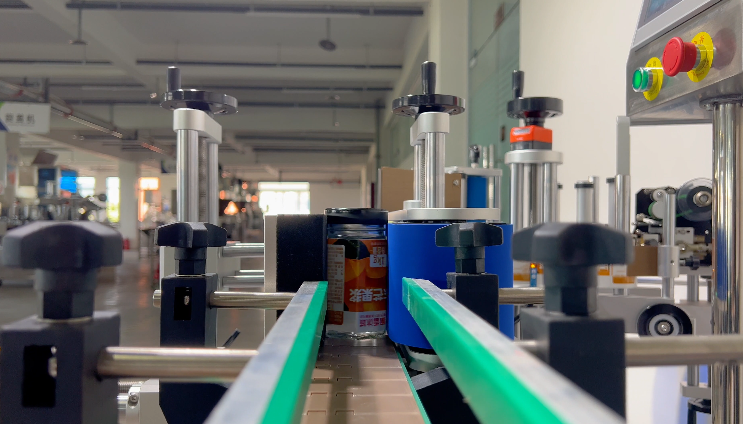
Understanding Automatic Roll-On Labeling Machines and Their Role in Production
What Is an Automatic Roll-On Labeling Machine and How Does It Work?
Automatic roll-on labelers work with servos, optical eyes, and conveyor belts to stick labels on products with pretty tight accuracy, usually within half a millimeter either way. The machines figure out where things are positioned using infrared beams or laser tech, then pull labels off rolls and press them onto surfaces with either rollers or vacuum pads. Everything runs at speeds over 400 items each minute, keeping up with fast production lines. These industrial strength systems can tackle all sorts of containers too - round bottles, rectangular boxes, whatever shape comes along. They adjust automatically for different materials including plastics, glassware, and metals without needing anyone to tweak settings manually. What makes these systems so valuable is that they cut down on those little errors people make when applying labels by hand, plus they keep going nonstop at rates no human worker could match even if they tried really hard.
From Manual to Automated: The Evolution of Labeling for Greater Consistency
Back when people did labeling manually, error rates often went over 12% in fast paced settings because of things like labels getting out of alignment, missed spots, or problems with the glue sticking properly. The newer automated roll on systems have really changed this game though. These machines slash those issues down by about 89%, thanks to their PLCs which keep everything consistent regarding how much pressure is used, what angle the label hits at, and exactly where it lands throughout different work shifts. According to some research from 2023 looking into packaging efficiency, companies that switched to these automatic labelers saw their waste related to labels drop around 34% each year, plus they hit nearly perfect placement accuracy at 99.6%. What makes these systems so valuable is how well they fit into existing production flows. They connect smoothly with both the filling machines before them and whatever comes after in packaging, creating continuous operation lines where labels get put on, checked for correctness, and monitored all without causing any slowdowns in production speed.
Boosting Labeling Speed and Synchronizing with High-Speed Production Lines
Increasing Throughput with Automated Roll-On Label Applicators
Roll on labeling machines can handle over 300 containers each minute, which is about four times quicker than when people do it manually. These systems come with special light sensors and motor controls that spot where containers are located and tweak label positioning as needed. When companies switch to these automatic systems, they see around 92 fewer mistakes in label application because there's no human error involved anymore. Plus, these machines keep pace with conveyor belts moving at speeds up to 150 feet per minute. The accuracy makes production lines run smoothly without stopping for adjustments. Factories using this technology often report between 21 and 34 percent better output than those still relying on semi automatic equipment.
How Faster Labeling Enhances Overall Line Efficiency
When labels get applied quickly, it really boosts how efficient the whole production line is because it keeps pace with those filler and capping machines that usually run between 120 to 180 bottles per minute. This approach cuts down on bottlenecks quite a bit actually around 41%. The automated labeling systems are pretty impressive too when it comes to switching between products. They slash changeover times by about two thirds thanks to pre set up settings for various bottle sizes, so most plants can switch SKUs within just three minutes flat. Less downtime means better utilization of everything further down the line such as case packers, which helps facilities hit nearly perfect performance metrics around 98% OEE when running continuously without interruptions.
Ensuring Precision, Accuracy, and Consistent Label Application
Achieving Repeatable Label Placement Through Automation
The combination of servo-controlled mechanisms along with vision guided alignment helps maintain proper label positions throughout numerous different applications. When companies switch from manual labeling to automated systems, they typically see around an 89 percent drop in placement errors. Some top manufacturers have actually measured their systems at about 99.4% consistent when everything runs smoothly in controlled settings. Getting this kind of repeatable accuracy matters a lot for meeting those tough industry regulations. Think about pharmaceutical packaging or food labeling requirements where something as small as a 1mm shift could technically put a whole batch out of compliance and create major headaches down the line.
Reducing Human Error and Minimizing Labeling Defects
Automation removes the “fatigue factor,” which accounts for 72% of manual labeling errors. Real-time quality control sensors detect issues such as wrinkled adhesive layers, air bubble formation, and misaligned print registration, allowing immediate correction. This proactive monitoring ensures only properly labeled products advance down the line.
Maintaining High-Quality Output Across Batches
Sealed lubrication systems and automated calibration protocols sustain performance during 24/7 operations. Operators report 63% fewer batch rejections after switching to automated labeling, with material waste dropping to 1.2% of total label stock—down from 8.7% in semi-automated setups.
Real-World Impact: Case Study in the Beverage Industry
Beverage Manufacturer Achieves 40% Increase in Labeling Throughput
One major soft drink manufacturer faced serious issues with their manual labeling process until they installed an automatic roll-on labeling machine last year according to PMMI's 2023 report. Within just half a year, production speeds jumped by around 40%. The new system has two axes for alignment, letting it stick labels onto containers at a rate of 450 per minute. That's almost three times faster than what their human workers could manage before. As a result, the company was able to move 15 employees from the line to quality control positions instead. They still keep running five days a week nonstop though, maintaining their production schedule despite all these changes.
Measuring Performance Gains After Integrating an Automatic Roll-On Labeling Machine
Post-implementation analysis revealed significant improvements:
- 65% reduction in labeling defects (0.3% error rate) thanks to micro-adjustment sensors
- 20% labor savings from reduced rework and supervision needs
- 94% Overall Equipment Effectiveness (OEE), up from 82% with manual methods (Packaging World 2023)
The integration allowed the manufacturer to scale production without expanding floor space—a critical advantage in dense beverage production environments.
Scaling Efficiency: Cost Savings and Future-Proofing Across Industries
Widespread Adoption in Pharma, Food & Beverage, and Cosmetics
Roll-on labeling machines have become pretty much essential for businesses needing to label products at scale with pinpoint accuracy. Pharma companies definitely need these machines to meet all those strict government rules about labels, whereas folks making drinks and snacks love how they can crank out between 500 to over a thousand containers every single minute. The beauty industry gets something special too with these machines capable of sticking labels onto tricky surfaces like curved glass bottles and flexible plastic tubes down to fractions of a millimeter precision. A recent look at automation trends shows that around four out of five manufacturers who switched to roll-on systems noticed better alignment with whatever specific labeling standards apply to their particular sector.
Reducing Operational Costs and Waste Through Reliable Automation
By minimizing labeling errors, these machines reduce material waste by 40% and lower labor costs by up to 60%. Their closed-loop design prevents adhesive residue buildup, reducing unplanned downtime for cleaning. One pharmaceutical company documented annual savings of $220,000 after transitioning to automated roll-on labelers.
Investing in Scalable Labeling Systems for Long-Term Growth
Roll on labeling machines that are modular in design actually offer pretty good long term adaptability. They let factories integrate things like vision inspection systems or adjust mandrels when production requirements change over time. The real advantage comes from being able to switch between different product lines quickly something that matters a lot during seasons with fluctuating demand or when expanding into new markets. Factories that have gone modular tell us they can reconfigure their setup about 35 percent faster than those stuck with traditional fixed equipment. This speed difference makes all the difference in staying competitive while adapting to whatever comes next in manufacturing.
Frequently Asked Questions
What are automatic roll-on labeling machines?
Automatic roll-on labeling machines are used to apply labels to products with precision. They use servos, optical eyes, and conveyor belts to achieve high accuracy and speed in the labeling process.
How do these machines improve production efficiency?
These machines significantly reduce labeling errors and enhance production speed, allowing factories to maintain high throughput with minimal manual intervention.
What industries benefit from automatic labeling systems?
Industries such as pharmaceuticals, food and beverage, and cosmetics benefit greatly as these machines improve accuracy, compliance, and production speed.
How does automation affect labor costs?
Automation reduces labor costs by decreasing manual labeling tasks, which also translates to savings on reworks and enhanced supervision needs.
What is the impact of these machines on product quality?
Automated labeling improves consistency, accuracy, and reduces defects, leading to higher quality outputs across production batches.
Table of Contents
- Understanding Automatic Roll-On Labeling Machines and Their Role in Production
- Boosting Labeling Speed and Synchronizing with High-Speed Production Lines
- Ensuring Precision, Accuracy, and Consistent Label Application
- Real-World Impact: Case Study in the Beverage Industry
- Scaling Efficiency: Cost Savings and Future-Proofing Across Industries
- Frequently Asked Questions