EN
EN

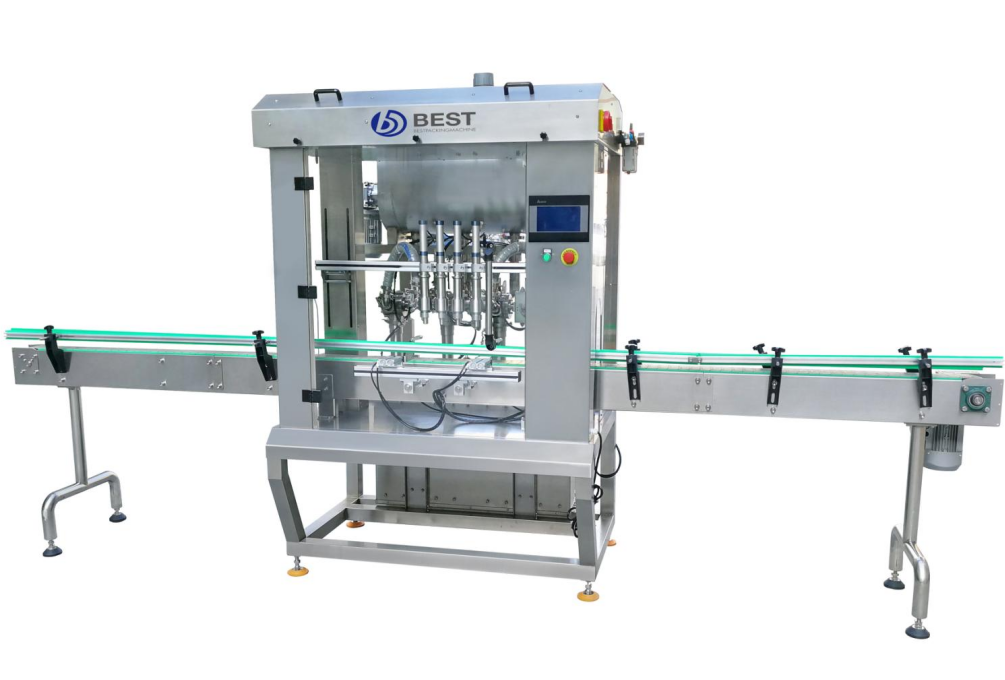
Understanding the 4-Head Piston Filler in Automated Packaging
Definition and Core Function of a 4-Head Piston Filler
The 4-head piston filler works as a type of volumetric packaging equipment featuring four separate pistons that can be controlled individually for dispensing liquids or semi-liquids into various containers. These machines differ from traditional pump systems because they work on what's called a positive displacement principle. Each piston pulls the product into its own chamber before pushing it out with pretty good accuracy around plus or minus half a percent according to industry reports from 2023. The real advantage becomes apparent when dealing with thicker substances such as cosmetic creams or food sauces. With this kind of filler, manufacturers get much better control over how much goes into each container, which means fewer spills during production and less wasted product overall.
How Multi-Head Piston Fillers Differ from Single-Head Configurations
Standard single-head piston fillers work one container at a time, which caps their speed around 120 per minute. Things get interesting when we look at four head setups though. These machines operate differently they fill while recharging at the same time. One piston is dispensing product while the other three are getting ready for their turn. This kind of parallel processing really boosts capacity, pushing it past 450 units each minute. A cosmetics company actually saw their output jump by roughly 40% after switching systems. Another plus point is the modular nature of these machines. Operators can tweak each head independently for different products running through the same line, all without stopping the whole operation. Some plants even run multiple product types side by side this way.
Role of Automation in Enhancing 4-Head Piston Filler Performance
The latest four head piston filler systems work seamlessly with automated conveyor belts and smart sensors connected through the internet of things technology. These machines constantly monitor conditions as they run, adjusting how far the pistons move when filling containers based on what happens to liquid viscosity as temperatures change throughout production runs. The result? Fill volumes stay accurate within just 0.3 milliliters difference from batch to batch. According to Packaging Digest from last year, this kind of automation cuts down on the need for workers to manually recalibrate settings by about 70%. Plus, these systems talk to other machinery both before and after them in the production line, which helps boost something called Overall Equipment Effectiveness or OEE for short. Take carbonated drinks as an example. When the nozzles automatically adjust their height during filling operations, it stops those pesky bubbles from forming foam at the top of bottles. This simple adjustment saves manufacturers around 18% in wasted product each year across their entire facility.
Increased Production Speed and Throughput with 4-Head Piston Filler Systems
Parallel Processing: The Principle Behind High-Speed Multi-Head Filling
When it comes to filling operations, four head piston fillers really stand out because they can run four stations at once. The market report from 2024 shows these machines cut down on cycle time by about 60% when compared to those old single head models. What makes this work so well is that each individual piston goes through its own filling process independently but still manages to keep everything measured accurately. This means manufacturers can package all sorts of stuff faster without losing track of how much gets put into each container. Think about things like lotions, glues, or even those thick industrial liquids we deal with daily. Speed doesn't have to mean sloppiness here.
Case Study: 40% Output Increase at a Cosmetics Manufacturer Using 4-Head Piston Filler
A cosmetics company of moderate size got rid of those pesky production bottlenecks when they swapped out their old single-head filler for a new 4-head piston system. After making this change, their hourly output jumped from around 1,200 to about 1,680 units each hour, which is roughly a 40 percent boost. What's really impressive though is that they kept the fill consistency within plus or minus 0.5% even for thicker lotions that are harder to work with. These kinds of multi-head systems let manufacturers crank up production without needing extra factory space because all those filling heads work together so well and move containers through the line much faster than before.
Optimizing Line Speed Through Synchronized 4-Head Piston Filler Integration
The latest four head filling machines now come equipped with servo driven controls and PLC logic that work together seamlessly with conveyor belts, capping units, and label applicators. Some of the newer models can actually handle between 80 to 120 containers per minute thanks to smart algorithms that constantly tweak the piston stroke timing as line speeds change throughout production runs. What this means in practice is fewer missed bottles when the line speeds up or slows down, plus there's about 18 percent less wear and tear on the machinery compared to older timer based systems. Manufacturers are really starting to notice these improvements in both efficiency and equipment longevity.
Precision and Consistency in Fill Accuracy Using 4-Head Piston Filler Technology
Market Demand for Tight Fill Tolerances in Automated Packaging
Food, pharmaceutical, and chemical industries now require fill accuracies within ±1% to meet regulatory standards and consumer expectations. A 2023 packaging trends survey revealed 78% of manufacturers consider precise dosing critical for compliance and brand reputation, driving demand for advanced piston filler systems.
How Piston-Driven Volumetric Filling Ensures ±0.5% Accuracy
The 4-head piston filler’s mechanical design eliminates variability by displacing exact liquid volumes through calibrated cylinder strokes. Unlike gravity or overflow methods, this volumetric approach maintains accuracy across viscosities from water-thin solvents to 50,000 cP creams, as validated by industrial testing.
Case Study: Dairy Processor Achieves High Consistency with 4-Head Piston Filler
A Midwest dairy reduced filling variances from 2% to 0.3% after upgrading to a 4-head piston system, preventing 12,000 annual packaging rejects. The configuration’s simultaneous multi-nozzle operation eliminated temperature-induced volume fluctuations common in single-head units during high-speed yogurt bottling.
Calibration and Feedback Loops for Maintaining Fill Precision
Modern systems integrate load cells and IoT-enabled sensors that perform self-checks every 500 cycles. One automated calibration protocol reduced manual adjustments by 90% at a personal care plant while sustaining ±0.5% accuracy through 10,000 hours of continuous operation.
Reduced Product Waste and Improved Operational Efficiency
Minimizing Overfills Through Precise Dosing in 4-Head Piston Fillers
Four head fillers with their piston driven mechanisms can hit around half a percent accuracy when dispensing products because they physically push out exact amounts. These machines get rid of what people call the splash factor that happens all the time with gravity based filling methods. When using those older systems, about two to three percent of whatever gets poured ends up stuck on the inside of containers instead of going into them properly. According to a recent study from 2023 looking at packaging efficiencies, these four head models cut down on excess material being put into containers by roughly ninety three percent compared to their single head counterparts. They achieve this improvement through something called simultaneous pressure regulated volume control during operation.
Quantified Impact: 15–20% Reduction in Material Waste Reported by Users
Food and pharmaceutical manufacturers report 15–20% less raw material waste after adopting 4-head piston fillers, translating to $50k–$200k annual savings for mid-sized facilities. This stems from three synchronized efficiencies:
- Automated viscosity compensation adjusting fill rates for temperature-sensitive products
- No-tool changeovers between container sizes (eliminating 5–7% transitional waste)
- Self-cleaning cycles recovering 98% of residual product from filling heads
These features help manufacturers achieve 89–92% OEE—15 points higher than manual filling lines.
Seamless Integration of 4-Head Piston Fillers into Fully Automatic Production Lines
Modular Design Enables Easy Integration with Upstream and Downstream Units
Modern four head piston fillers come with a modular design that makes them much easier to work with when connecting to existing conveyor belts, capping equipment, and label applicators. The standardized connections mean factory staff can hook these filling machines onto their packaging lines within just a few hours instead of spending days on installation, which cuts down on lost production time when making system improvements. Top manufacturers have gone even further by including adjustable frames for mounting and ready made PLC programming templates. These features let the machines handle all sorts of different bottle shapes and sizes while keeping up with fast paced operations that can process around 250 items every minute without breaking a sweat.
Case Study: Beverage Company Cuts Changeover Time by 30%
One major soft drink producer cut their format changeover time down dramatically when they switched to a four head piston filler equipped with those adjustable nozzle arrays. With the new system's recipe based controls, operators could switch seamlessly between filling 12 ounce aluminum cans and liter sized PET bottles. The equipment actually talks to the other machines in real time so everything stays synchronized with the rinsers before and the labelers that come after. Getting rid of all those manual adjustments made a world of difference. Production went up by around 7% per year once this was fully implemented across their facilities. Most plant managers we've spoken to say it's been worth every penny invested in the upgrade.
Support for Industry 4.0: Connectivity and Data Exchange in Modern 4-Head Fillers
The latest generation of four head piston fillers comes equipped with built in IoT sensors and OPC UA communication protocols that let them talk back and forth with MES and ERP systems. These machines generate real time data about fill accuracy which stays within plus or minus 0.3 percent, along with monitoring motor temps and checking how well seals are holding up. This information helps predict when maintenance will be needed before breakdowns happen, cutting down unexpected stoppages by around 18% according to Packaging World in 2023. Factory workers can watch overall equipment effectiveness numbers through their HMIs while making adjustments to things like viscosity compensation settings as they go, whether they're dealing with sticky adhesives or creamy dairy products that need special handling.
Synchronization Strategies for Maximizing Overall Equipment Effectiveness (OEE)
Achieving 85%+ OEE requires harmonizing 4-head piston filler cycles with downstream equipment through:
- Encoder-driven timing belts that match filler speeds to capping torque requirements
- Adaptive pressure control compensating for product viscosity changes during batches
- Machine learning algorithms optimizing purge cycles to minimize material waste
Real-time feedback loops between fill heads and checkweighers ensure consistent container weights while maintaining throughput above 200 BPM.
FAQs
What is the primary function of a 4-head piston filler?
The 4-head piston filler is primarily used to dispense precise volumes of liquid or semi-liquid into containers, thanks to its positive displacement principle which offers high accuracy and control over fill volumes.
How do 4-head piston fillers improve production speed?
They allow simultaneous filling and recharging processes, boosting speed and capacity by enabling continuous output and reducing cycle times, significantly increasing throughput compared to single-head systems.
Why is automation important in 4-head piston fillers?
Automation enhances their performance by allowing real-time monitoring and adjustments, leading to more consistent fill volumes, reduced manual recalibration, and improved overall equipment effectiveness.
How do 4-head piston fillers reduce product waste?
By ensuring precise dosing and minimizing overfills, they significantly decrease material waste, which translates to cost savings and improved operational efficiency.
Table of Contents
- Understanding the 4-Head Piston Filler in Automated Packaging
- Increased Production Speed and Throughput with 4-Head Piston Filler Systems
- Precision and Consistency in Fill Accuracy Using 4-Head Piston Filler Technology
- Reduced Product Waste and Improved Operational Efficiency
- Seamless Integration of 4-Head Piston Fillers into Fully Automatic Production Lines
- FAQs