EN
EN

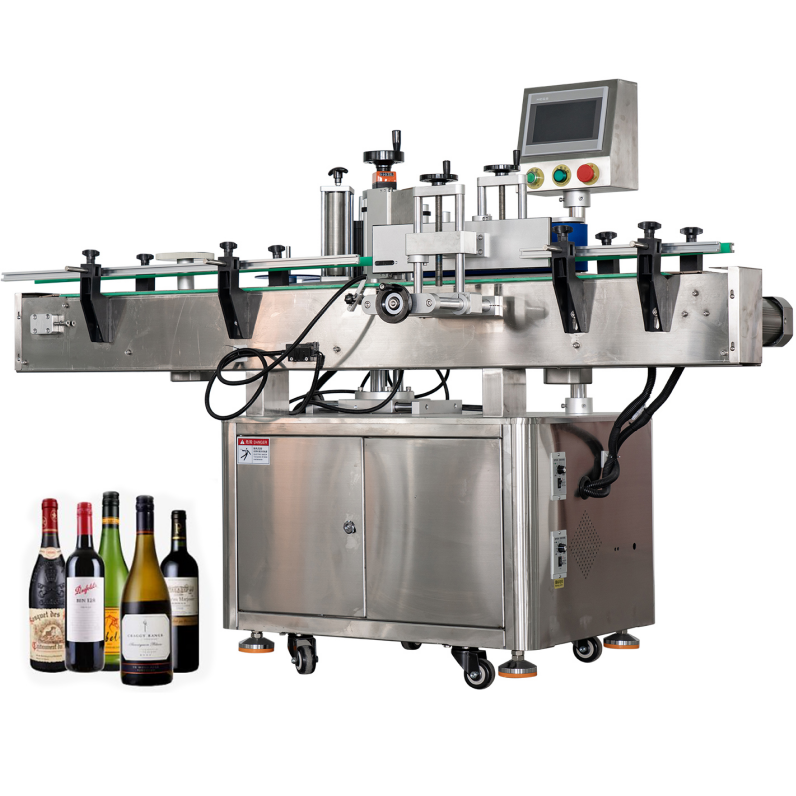
Understanding Efficiency in Automatic Cylindrical Bottle Labeling Machines
Efficiency in automatic cylindrical bottle positioning labeling machines goes beyond speed—it reflects how well the system balances throughput, precision, and operational costs. Modern systems achieve 98% first-pass accuracy rates, minimizing rework while sustaining speeds over 400 bottles per minute.
Defining efficiency in automated labeling systems
True efficiency arises when automation eliminates human error while ensuring consistent output. Industry data shows these systems reduce label misalignment by 72% compared to manual methods, with advanced vision systems maintaining <0.5mm placement tolerances—even on curved glass or plastic surfaces.
Key performance indicators for automatic labeler efficiency
Three core metrics define optimal performance:
- Throughput: 400–600 bottles/minute for mid-sized systems
- Changeover flexibility: <15 minutes for full diameter adjustments
- Uptime: 95%+ operational availability in continuous production
A 2024 automation study found beverage manufacturers achieved 63% faster cycle times after adopting servo-driven positioning, with error rates dropping to just 0.2% per 10,000 units.
The role of machine design in production efficiency in bottling
Precision engineering directly impacts long-term reliability. Servo-driven rotary platforms cut vibration-induced errors by 34% versus mechanical drives. Machines equipped with auto-adjusting dispensers maintain 99% material utilization across temperature and humidity shifts—essential for pharmaceutical and chemical labeling where consistency is non-negotiable.
Speed and Throughput: Measuring Bottles Per Minute in High-Speed Labeling
Measuring Labeling Speed and Efficiency in Bottles Per Minute
Modern automatic cylindrical bottle labeling systems are benchmarked by bottles-per-minute (BPM), a key indicator of scalability. Inline systems reach 200–300 BPM, a 600% improvement over semi-automatic models. This increase reduces idle time and improves synchronization with upstream and downstream equipment, enhancing overall line efficiency and ROI.
High-Speed Production Capabilities of Wrap-Around Labeling Machines
Wrap-around labelers handle massive volumes while still keeping things accurate enough for most applications. These machines typically come with servo-driven controls and modular parts that let them run at speeds approaching 250 bottles per minute, though in practice most facilities see around 200-220 BPM depending on setup. The misalignment rate stays pretty low too, usually under 1% which is actually quite impressive considering how fast they move. What really sets modern models apart are features like self-adjusting vacuum drums that compensate for minor bottle variations, plus real-time vision systems that catch errors before they become problems. This combination works well on different materials including glass containers, PET plastic bottles, and even aluminum cans meeting those tough standards required by both beverage manufacturers and pharmaceutical companies who need absolute consistency in their packaging.
Case Study: Efficiency Gains in a Beverage Bottling Line
A mid-sized juice producer upgraded to an automatic labeling system with measurable results:
| Metric | Before Automation | After Automation |
|---|---|---|
| Average BPM | 45 | 280 |
| Label Error Rate | 12% | 0.8% |
| Monthly Downtime | 14 hours | 2.2 hours |
The transition eliminated manual repositioning, reduced label waste by 89%, and saved $162,000 annually (Ponemon 2023).
Trends in Increasing Labeling Speed and Reducing Cycle Time
Most top manufacturers have adopted AI for predictive maintenance these days, which helps them dodge those costly unexpected shutdowns that drag down their best BPM rates. The latest smart labelers come equipped with torque sensors and clever algorithms that tweak roll tension and applicator pressure on their own. According to the 2024 Packaging Innovation Report, this tech cuts down alignment problems at high speeds by around 34%. What does all this mean? Well, companies are getting closer to hitting those ultra-fast cycle times below half a second without sacrificing accuracy in their labeling processes.
Accuracy, Consistency, and Error Reduction in Automated Label Application
Precision and consistency in label application on curved surfaces
Labeling cylindrical containers demands technology that compensates for curvature. Modern systems use servo-driven alignment and vacuum belts to achieve <1 mm accuracy across rotating surfaces. A precision engineering analysis (2023) showed such systems reduce misalignment by 92% versus manual application—critical in cosmetics, where visual perfection influences consumer perception.
Reduction of labeling errors and rework through automation
By removing human fatigue from the process, automated systems sustain 99.8% placement accuracy over large production runs. This level of consistency cuts rework costs by $18–$25 per 1,000 units in beverage lines, eliminating the need for costly manual corrections.
Data insight: Error rates in manual vs. automatic cylindrical bottle labeling
The performance gap between manual and automated processes is stark:
| Process Type | Average Error Rate | Cost per Error |
|---|---|---|
| Manual Application | 5.2% | $4.70 |
| Automated Systems | 0.3% | $0.85 |
This 17x improvement stems largely from integrated machine vision systems that inspect every label in real time, according to a 2023 automation efficiency study.
Can high speed compromise labeling accuracy?
Not in modern systems. High-speed models processing 600+ bottles/minute maintain ±0.5 mm placement variance using closed-loop feedback that makes micro-adjustments every 0.2 seconds. These capabilities prove that throughput and precision are no longer trade-offs but coexisting benchmarks in advanced packaging.
Minimizing Downtime and Maintenance Costs in Continuous Production
Unplanned downtime can cost manufacturers up to $1.3 million per hour (Balachandran 2024). For automatic cylindrical bottle labeling machines, continuous operation depends on rapid changeovers, adaptable configurations, and proactive maintenance strategies.
Downtime Reduction and Quick Changeover Between Batches
Servo-driven positioning and automated label roll switching enable batch transitions in under 15 minutes. A recent industry analysis revealed that 70% of maintenance teams cut changeover times by 62% after adopting these technologies. Magnetic quick-release clamps and pre-programmed profiles allow seamless switching between bottle diameters—keeping throughput above 98% during product changes.
Impact of Machine Customization for Different Container Types on Operational Continuity
The modular tooling heads along with those adjustable applicators work really well for all sorts of container shapes, whether they're tiny narrow vials or big wide mouth bottles. Systems that have IoT built into them can actually spot what kind of container is coming through and move those suction cups around with about 0.2mm accuracy. According to some research on how IoT integrates into manufacturing, this cuts down on alignment problems that cause production stops by roughly 40%. And speaking of production losses, traditional machines tend to lose around 18% efficiency whenever operators switch between different container types. These newer adaptable systems just don't have that same problem.
Strategies for Minimizing Downtime and Maintenance Costs
- Predictive maintenance algorithms analyze motor torque and bearing wear to schedule replacements before failure, cutting unplanned downtime by 45%
- Self-lubricating guide rails and scratch-resistant sensors reduce routine servicing frequency by 60%
- Standardized modular components enable fast in-house repairs with pre-validated parts, lowering annual maintenance costs by 30%
Together, these approaches sustain 95% operational availability even in 24/7 environments, aligning with just-in-time manufacturing demands.
Material Efficiency and Scalability in Fully Automatic Labeling Systems
Minimal waste and improved label precision in automatic systems
Advanced optical sensing and servo-controlled applicators drive exceptional material efficiency. Automatic labeling systems reduce substrate waste by 30–40% compared to manual methods (Packaging Trends Report 2023), thanks to precise pressure control and alignment. Real-time edge detection corrects deviations during high-speed runs, achieving 99.5% label utilization and ±0.3mm placement accuracy across batches.
Label roll utilization and edge alignment technologies
Patented tension control systems optimize consumption of label rolls, reducing liner waste by 27% through precise tracking. Intelligent feed mechanisms compensate for variations in liner thickness and adhesive spread, enabling uninterrupted use of jumbo 10" rolls without manual intervention—maintaining accuracy throughout extended runs.
Cylindrical bottle compatibility across sizes and materials
Mandrel-free universal designs handle containers from 1cm to 30cm in diameter without physical adjustments. Multi-sensor arrays instantly recognize glass, PET, or aluminum and auto-adjust application parameters. This versatility allows mixed-material production on a single setup, eliminating changeover delays and supporting agile manufacturing.
Adapting to variable batch sizes without sacrificing speed or uptime
Modular systems switch between small 500-unit specialty runs and 50,000-unit bulk batches via programmable presets. Integrated buffer conveyors maintain 98% throughput during transitions, while automatic core changers ensure uninterrupted supply. This scalability lets manufacturers respond to seasonal demand swings while stabilizing per-unit costs below $0.003.
FAQ
What is the main benefit of using automatic cylindrical bottle labeling machines?
Automatic cylindrical bottle labeling machines provide high-speed labeling with accuracy, efficiency, and minimal downtime, making them ideal for large-scale production environments.
Can these machines handle different types of materials and container sizes?
Yes, these machines are designed to be versatile, accommodating glass, PET, and aluminum containers of various sizes with automatic adjustments to ensure precision and consistency.
How do these systems minimize waste and improve label precision?
Advanced optical sensing and servo-controlled applicators ensure efficient material use, reducing substrate waste by up to 40%. Real-time edge detection keeps placement consistent across batches.
Is maintenance a significant concern for automatic labeling machines?
No, predictive maintenance algorithms and standardized modular components help minimize downtime and repair costs, ensuring operational continuity in demanding production cycles.
Table of Contents
- Understanding Efficiency in Automatic Cylindrical Bottle Labeling Machines
- Speed and Throughput: Measuring Bottles Per Minute in High-Speed Labeling
- Accuracy, Consistency, and Error Reduction in Automated Label Application
- Minimizing Downtime and Maintenance Costs in Continuous Production
- Material Efficiency and Scalability in Fully Automatic Labeling Systems
- FAQ