EN
EN

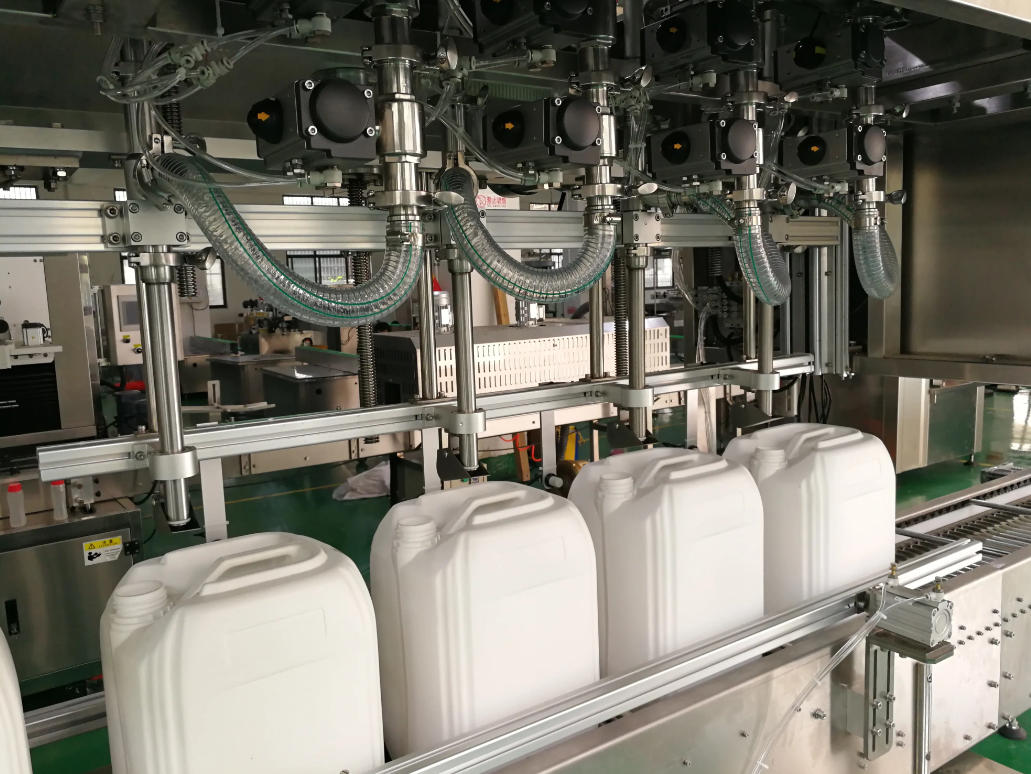
How a 4-Head Piston Filler Works in Food Processing
Working principle of the 4-head piston filler for food products
The 4-head piston filler works with four pistons that move together to measure out exact amounts of thick food products. Each time it runs through a cycle, those pistons pull back creating suction that draws material from a stainless steel container into separate chambers. Once packaging lines up under the dispensing heads, the pistons force the product into containers with about half a percent accuracy in volume measurement. This kind of precision matters a lot when dealing with things like salad dressings, condiments, and milk products where getting the right amount per package is critical. Newer models let operators change how far the pistons travel using digital controls, so switching between different recipes happens fast without having to tweak any physical parts. According to recent studies published in Food Engineering last year, these kinds of fillers cut down on wasted product by around 1.2 percent compared to older gravity based systems specifically when working with tomato paste.
Key design features enabling food-grade performance
These fillers prioritize food safety through:
- 316L stainless steel construction resisting corrosion and bacterial growth
- CIP (Clean-in-Place) systems enabling chemical flush cycles without disassembly
- FDA-compliant sealing materials preventing lubricant contamination
The modular piston heads allow individual maintenance, minimizing production downtime during sanitation. An integrated overflow catchment system contains spills, critical for upholding hygiene benchmarks in facilities handling allergens like nut butters.
Comparison with other piston filler configurations in food applications
| Configuration | Throughput (containers/min) | Best For |
|---|---|---|
| Single-head | 20-40 | Small-batch artisanal productions |
| 4-head | 80-120 | Medium-volume lines with 3-8 SKUs |
| 8-head | 150-200 | High-speed sauce bottling plants |
While 8-head models achieve faster speeds, the 4-head design provides 25% better accuracy with semi-solids like cookie dough (2024 Food Processing Equipment Report). Single-head units remain cost-effective for startups but struggle with recipes requiring temperature-controlled filling.
Advantages of 4-Head Piston Fillers for Viscous Food Products
High Fill Precision and Consistency for Sauces, Pastes, and Shear-Sensitive Foods
4-head piston fillers deliver ±0.5% volume accuracy for viscous foods such as hummus, nut butters, and custards. The synchronized piston action prevents shear damage to delicate emulsions while ensuring consistent portioning—critical for products prone to fat separation.
Improved Efficiency and Reduced Product Waste in Production
Dual-stroke operation cuts changeover times by 33% compared to single-head models. Automated viscosity compensation adjusts filling speeds in real time, reducing product giveaway to less than 1% for high-value ingredients like truffle oils or premium sauces.
Case Study: Accurate Tomato Paste Filling Using a 4-Head Piston Filler
A leading sauce manufacturer achieved 99.4% fill accuracy across 12,000 units per hour using a 4-head piston filler. The systemâs heated hopper maintained optimal paste flow without caramelization, while CIP-compatible seals eliminated cross-contamination risks between batches.
Optimized Output for Medium to High-Volume Food Manufacturing
The modular design supports throughputs from 2,000â15,000 units/hour without mechanical redesign. Parallel filling heads enable continuous operation—while one pair cleans, the other maintains production—maximizing uptime for 24/7 food processing lines.
Food Safety and Sanitation Standards for 4-Head Piston Fillers
Stainless Steel Construction and Compliance with Food Safety Regulations
4-head piston fillers use food-grade stainless steel (typically 304 or 316L) for all product-contact surfaces, ensuring compliance with FDA, EU 1935/2004, and EHEDG standards. This minimizes corrosion and bacterial adherence, with studies showing stainless steel reduces contamination by up to 95% compared to non-compliant alloys (Food Hygiene Journal, 2023).
Ease of Cleaning and Maintenance in Multi-Head Piston Filling Machines
The latest generation of four head piston fillers comes equipped with built in CIP systems and parts that can be taken apart without tools, especially useful for those tricky areas around nozzles where contamination risks are highest. The machine builders have also made it easier to swap out piston seals and finish surfaces to a mirror smoothness level below 0.8 microns roughness average. This makes a real difference in preventing those stubborn biofilms from forming. Factory workers who've switched to these new models tell us cleaning takes about 40 percent less time compared to what they used before. Many top equipment makers are now designing their machines with interchangeable modules that make daily cleaning routines much simpler without compromising on the seal integrity that keeps everything sanitary throughout production runs.
Design Features Ensuring Hygiene in Continuous Food-Grade Operations
Key innovations include:
- Quick-disconnect nozzle heads for mid-shift sanitization
- Gasket-free piston seals rated for 200°C steam
- Sloped surfaces to eliminate fluid pooling
These features align with GFSI-recognized hygiene standards, enabling seamless integration into HACCP-certified production lines. Recent audits show 4-head piston filler designs reduce cross-contamination incidents by 63% in multi-product facilities (Global Food Safety Initiative, 2022).
Product Compatibility: Matching 4-Head Fillers with Food Viscosity and Flow
Understanding Viscosity and Flow Behavior in Liquid and Semi-Solid Food Filling
The thickness of a liquid, what we call viscosity, really matters when it comes to how well fillers work. Standard four head piston fillers generally work best with materials ranging from about 500 to 50 thousand centipoise. These machines are particularly good at handling things like salad dressings and fruit purees which get thinner when pressure is applied but then maintain their shape once dispensed. This contrasts sharply with overflow systems that are made for runnier stuff below 100 cP. The piston type equipment actually pushes the product through with controlled pressure, making sure thick materials come out smoothly without creating messes or trapping air bubbles in the process.
Ideal Applications: Jams, Dressings, Dairy, and Similar Viscous Food Products
These fillers achieve ±0.5% volume accuracy with semi-solid foods, making them ideal for:
- Fruit preserves: Maintains chunk integrity while filling 120 jars/minute
- Yogurt-based dips: Minimizes product shear to preserve texture
- Nut butters: Handles 15,000â25,000 cP thickness without clogging
A 2023 International Food Technologists (IFT) report found 85% of processors using 4-head configurations for viscous sauces reduced giveaway waste by 11% compared to pump systems.
Limitations With Low-Viscosity or Highly Aerated Food Substances
The 4-head design faces challenges with:
- Broths or oils (<300 cP): Gravity systems achieve 30% faster cycle times
- Whipped creams: Pneumatic fillers better preserve foam structure
- Carbonated beverages: Overflow systems prevent COâ loss
| Filler Type | Viscosity Range (cP) | Ideal Food Applications |
|---|---|---|
| Gravity/Overflow | 1â300 | Juices, infused oils |
| 4-Head Piston | 500â50,000 | Hummus, cheese spreads |
| Progressive Cavity | 1,000â100,000 | Dough batters, frozen desserts |
Balancing Accuracy and Yield in Real-World Food Production Settings
Leading manufacturers recommend 4-head systems for plants producing 5â20 tons/day of viscous products. A dairy processor using this configuration for Greek yogurt filling reported 99.4% weight consistency across 8-hour shifts (2023 operational data). However, throughput decreases 18â22% when handling <800 cP products compared to dedicated low-viscosity fillers.
Scalability and Throughput: Is the 4-Head Configuration Right for Your Line?
Throughput comparison: 4-head vs. single and 8-head piston filling machines
The four head piston filler sits right in between those basic single head models and the big boys with eight heads. Single head fillers usually manage around 20 to 50 containers per minute give or take 1.5% accuracy. These work great for small runs or when companies are still testing products in their labs. Moving up to four head setups gets things going at 80 to 200 containers per minute with better precision at plus or minus 0.8%. This makes them perfect for mid sized food production lines where they're filling dressings, yogurts, or similar products day after day. The eight head machines definitely pump out more volume, handling over 200 to 500 containers per minute but come with some tradeoffs. Their accuracy drops back to about 1.2% variance and they cost a lot more upfront. For most businesses making under five million units each year, these bigger machines just aren't worth the investment.
Balancing speed, precision, and operational flexibility in food lines
When it comes to food manufacturing, companies need to decide between speed for thin liquids or accuracy for thick products. The four head piston filler works best with medium thick substances around 5,000 to 25,000 centipoise. What makes this equipment stand out is how those synchronized pistons keep portions within half a gram accuracy even when running at 150 fills per minute. Manufacturers have seen real benefits from this setup too. Studies done last year showed that these multi head systems cut down wasted product by somewhere between 12 and 18 percent compared to older single head machines when making things like jam or peanut butter. That kind of efficiency matters a lot in today's competitive market.
When to scale up or down based on production volume and changeover needs
- Choose 4-head fillers if your facility produces 1Mâ5M units/year across 3â10 SKUs.
- Opt for single-head machines for seasonal products or trial runs requiring frequent recipe swaps.
- Upgrade to 8-head systems only when exceeding 85% daily utilization rates on 4-head units.
The modular design of modern 4-head piston fillers allows manufacturers to add heads incrementally, cutting scalability costs by 30â40% compared to full-line overhauls.
FAQ Section
What is the primary advantage of a 4-head piston filler?
The primary advantage of a 4-head piston filler is its ability to deliver high fill precision and consistency, typically achieving ±0.5% volume accuracy. This makes it ideal for filling viscous foods like sauces and pastes.
How does a 4-head piston filler improve production efficiency?
A 4-head piston filler improves production efficiency through dual-stroke operations, automated viscosity adjustments, and reduced product waste, enabling faster changeovers and less product giveaway for high-value ingredients.
What products are best suited for filling with a 4-head piston filler?
A 4-head piston filler is best suited for semi-solid and viscous products such as hummus, nut butters, and yogurt-based dips, thanks to its high precision and ability to preserve product texture.
How does a 4-head piston filler ensure food safety?
4-head piston fillers ensure food safety through use of food-grade stainless steel, compliance with regulations, CIP systems for thorough cleaning, and design features that prevent contamination and facilitate hygiene.
Can a 4-head piston filler handle low-viscosity substances?
4-head piston fillers are not ideal for low-viscosity substances like broths or oils, as these may achieve faster cycle times with gravity systems or require different filler technologies for optimal results.
Table of Contents
- How a 4-Head Piston Filler Works in Food Processing
- Advantages of 4-Head Piston Fillers for Viscous Food Products
- Food Safety and Sanitation Standards for 4-Head Piston Fillers
- Product Compatibility: Matching 4-Head Fillers with Food Viscosity and Flow
- Scalability and Throughput: Is the 4-Head Configuration Right for Your Line?