EN
EN

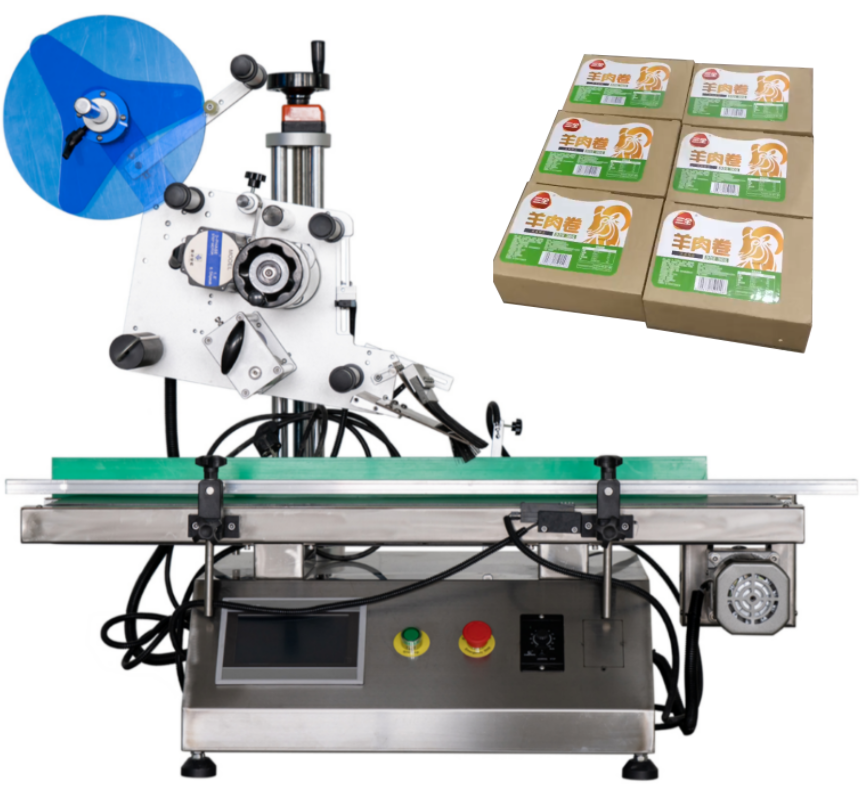
Understanding Small-Batch Labeling Needs for Automatic Top Label Applicators
Defining small-batch production in labeling contexts
Small-batch labeling typically involves production runs under 5,000 units, requiring equipment that balances precision with operational agility. Unlike high-volume operations, these scenarios demand rapid changeovers between product lines without sacrificing labeling accuracy.
How throughput speed and production volume impact machine selection
Automatic labeling systems designed for 30–50 products per minute optimize small-scale efficiency—faster than manual methods yet avoiding the excess capacity costs of industrial-scale machines. This throughput range reduces idle time while maintaining flexibility for variable order quantities.
Key requirements for automatic top label applicator in low-volume settings
What makes these labelers stand out? They come with easy adjustments that work across different container sizes without needing any tools. The machines also have really accurate sensors that place labels within half a millimeter either way. Plus they take up minimal space, usually less than 1.5 square meters. Big name manufacturers are starting to roll out modular automatic top label applicators these days. These systems let companies boost their capacity by around three times just by adding components, no need to scrap the whole setup. And here's something important for small operations: these systems hit about 98.7% accuracy right off the bat even when running at lower volumes. That kind of performance difference can mean the difference between staying profitable or not when margins are already tight.
Semi-Automatic vs Fully Automatic: Balancing Flexibility and Efficiency
Semi-automatic vs automatic labeling machines: trade-offs in efficiency and control
Small-batch manufacturers face a key decision: according to PMMI's 2023 packaging survey, 58% prioritize flexibility over raw speed. Semi-automatic systems excel at handling variable container sizes with manual quality checks, ideal for production runs under 500 units/day. Fully automatic models achieve 98% consistency at 2,000+ units/hour but require 3–5x greater upfront investment.
Machine configuration and changeover flexibility in small-scale operations
Modern solutions bridge this gap through:
- Tool-free adjustment systems enabling 90-second changeovers
- Interchangeable label unwind shafts for multi-product batches
- Pre-programmed memory for 50+ container profiles
Case study: Reducing downtime with quick-setup automatic top label applicators
A Midwest craft brewery reduced seasonal label transition time from 47 minutes to 8 minutes using semi-automatic applicators with auto-registration sensors—achieving 22% higher equipment utilization without increasing staff.
Flexibility in labeling equipment as a driver of ROI for small businesses
Operations processing fewer than 10 SKUs achieve an 18-month ROI through:
— 80% reduction in labeling errors vs manual application
— 55% faster product line transitions
— 30% higher daily throughput capacity
Ease of Use and Setup for Small-Scale Automatic Top Label Applicator Operations
User-friendly interfaces and training requirements for non-industrial teams
Most small batch production facilities don't have their own engineers on site, so the equipment needs to be easy enough for anyone to operate. The newer machines come with touch screens that show what's wrong when something goes wrong, plus they have ready made settings that cut down how long it takes to train someone new. Someone who knows nothing about the tech can still set up where labels go and adjust sensors using these step by step guides. We've run the numbers and found that even with regular folks doing the setup, the system stays accurate over 99 percent of the time during our testing phase.
Setup time reduction through modular design in industrial labeling machine for small businesses
The modular design of automatic top label applicators makes setup much simpler thanks to their standardized parts and no-tool adjustments. When companies install these systems with interchangeable application heads and ready-to-go sensor modules, they can switch formats in just 40 minutes compared to over three hours needed for older equipment. For manufacturers dealing with anywhere between five to fifteen different product codes at once, this kind of quick changeover really matters. Before these new systems came along, workers spent nearly three quarters of their week simply reconfiguring machines according to the Packaging Efficiency Report from last year. The time savings alone justify the investment for most operations.
Scalability and Future-Proofing Your Automatic Top Label Applicator Investment
Matching Labeling Performance and Production Capacity to Growth Projections
When choosing an automatic top label applicator that can handle changing requirements, it makes sense to match what the machine can do with expected business growth over the next three to five years. Machines that offer variable output rates between around 30 and 120 labels per minute let companies grow at their own pace without spending money on extra capacity they won't need right away. Market experts are talking about roughly 5 to 6 percent annual growth in labeling automation all the way through 2030. This trend is especially strong in sectors like pharma and beauty products, where production runs often change size from week to week. These industries need equipment that bends with their demands instead of forcing them into rigid production schedules.
Throughput Capacity for Small to Mid-Sized Labeling Operations: What’s Realistic?
Manufacturers averaging 500–2,000 units/day typically need 40–60 labels/minute—speeds that balance precision with energy efficiency. High-speed industrial models (150 labels/minute) often exceed operational needs and increase maintenance costs by 18–22% (PMMI 2023). Prioritize machines with variable speed controls to handle seasonal spikes without compromising label placement accuracy (±0.5 mm tolerance).
Scalability Features in Modern Automatic Top Label Applicators (Modular Upgrades, Software Controls)
Leading systems offer three scalability pathways:
- Mechanical modularity: Add pneumatic arms or rotary feeders as production expands
- Software scalability: Cloud-connected controls adapt to new packaging geometries via pre-programmed templates
- Sensor upgrades: Machine vision systems with 25–200% resolution adjustability meet emerging security label requirements
Industry Paradox: When Full Automation Slows Down Small-Batch Agility
According to the Labeling Trends Report from 2024, around 42 percent of manufacturers notice their productivity taking a hit when they rely on fully automated systems for runs below 500 units. The problem comes with too much automation creating stiffness during those frequent changeovers, which is really problematic for facilities dealing with anywhere from 8 to 12 different stock keeping units each day. What works better? Hybrid setups where operators can tweak pressure rollers between 5 and 25 psi settings and make minor adjustments to label angles within plus or minus 15 degrees. These mixed approaches keep things flexible enough for smaller production runs but still capture most of what makes automation valuable in the first place, somewhere around 94 to 96 percent efficiency retained without sacrificing adaptability.
Customization and Application Accuracy in Automatic Top Label Applicators
Manual vs. Machine Label Application: Accuracy, Consistency, and Labor Cost Analysis
Manual labeling has a 12–18% error rate in small-batch operations, leading to rework costing $18 per labor hour (PMMI 2023). Automatic top label applicators deliver <2% misalignment rates and operate at triple the speed of manual teams. Industry benchmarks show 47% lower labor costs per 1,000 units labeled compared to manual methods.
Customization Options for Unique Container Shapes and Label Sizes
Leading systems combine adjustable mandrel systems (handling 0.5–6" diameters) with programmable vision sensors to accommodate 98% of common container geometries. For irregular shapes like tapered bottles, modular labeling attachments enable precise wrap-around labeling without custom tooling—ideal for craft producers rotating seasonal designs.
Data Point: 68% of Small Manufacturers Prioritize Adjustable Tension and Sensor Controls (Source: PMMI 2023)
Recent data shows 68% of small-batch operators prefer machines with:
- Real-time tension monitoring (±0.5N sensitivity)
- Auto-correcting edge sensors (0.1mm detection threshold)
- Tool-free pressure adjustments for fragile labels
These features reduce material waste by 33% compared to basic mechanical systems, proving essential for delicate organic lines or premium metallic stickers.
FAQ
What defines small-batch labeling?
Small-batch labeling generally refers to production runs under 5,000 units, requiring precise equipment for efficient operation and rapid changeovers without sacrificing accuracy.
What are the key requirements for an automatic top label applicator in low-volume settings?
Key requirements include tool-free adjustments, precise sensor alignment within 0.5mm, modular design for scalability, small footprint, and high accuracy at over 98%.
How do semi-automatic and fully automatic systems differ in efficiency for small-batch operations?
Semi-automatic systems are flexible with container sizes and manual checks, ideal for runs under 500 units/day. Fully automatic systems offer higher consistency at a greater upfront cost.
Why is modular design beneficial for small-scale labeling operations?
Modular design offers easier setup with standardized parts, quick changeovers, and scalability with interchangeable components and sensor modules.
How does automation impact scalability and future-proofing of labeling operations?
Automation allows operations to adjust to growth by matching machine capabilities to projected needs, with variable speeds and modular upgrades enhancing adaptability.
Why might full automation hinder small-batch agility?
Fully automated systems can become rigid during frequent changeovers needed in small-batch runs, making hybrid setups more suited for flexibility and efficiency.
Table of Contents
- Understanding Small-Batch Labeling Needs for Automatic Top Label Applicators
-
Semi-Automatic vs Fully Automatic: Balancing Flexibility and Efficiency
- Semi-automatic vs automatic labeling machines: trade-offs in efficiency and control
- Machine configuration and changeover flexibility in small-scale operations
- Case study: Reducing downtime with quick-setup automatic top label applicators
- Flexibility in labeling equipment as a driver of ROI for small businesses
- Ease of Use and Setup for Small-Scale Automatic Top Label Applicator Operations
-
Scalability and Future-Proofing Your Automatic Top Label Applicator Investment
- Matching Labeling Performance and Production Capacity to Growth Projections
- Throughput Capacity for Small to Mid-Sized Labeling Operations: What’s Realistic?
- Scalability Features in Modern Automatic Top Label Applicators (Modular Upgrades, Software Controls)
- Industry Paradox: When Full Automation Slows Down Small-Batch Agility
- Customization and Application Accuracy in Automatic Top Label Applicators
-
FAQ
- What defines small-batch labeling?
- What are the key requirements for an automatic top label applicator in low-volume settings?
- How do semi-automatic and fully automatic systems differ in efficiency for small-batch operations?
- Why is modular design beneficial for small-scale labeling operations?
- How does automation impact scalability and future-proofing of labeling operations?
- Why might full automation hinder small-batch agility?