EN
EN

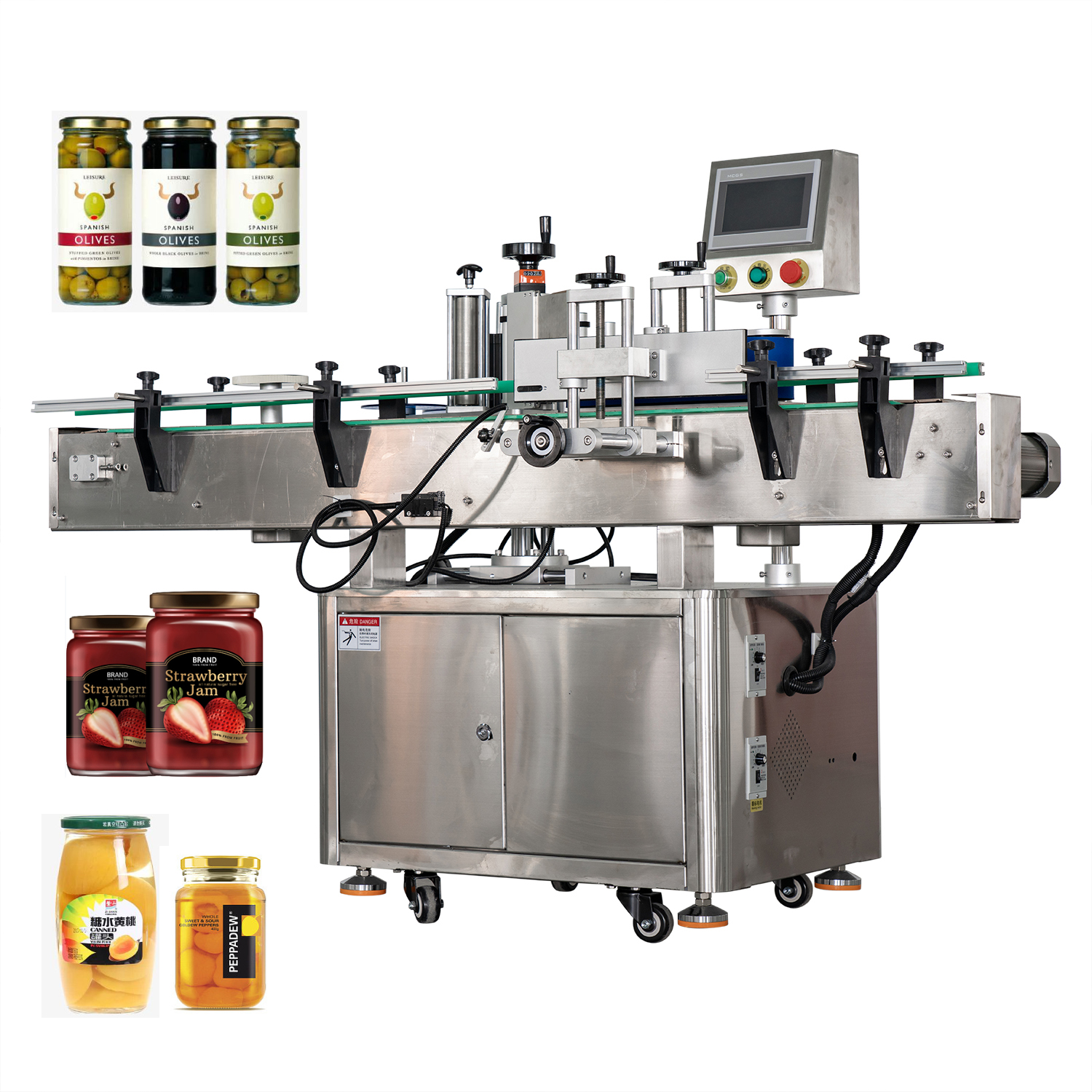
Why Bottle Diameter Is the Critical Parameter for Automatic Cylindrical Bottle Positioning Labeling Machines
The mechanical link between diameter and label placement accuracy
The size of a bottle's diameter plays a key role in how far it needs to rotate when positioned by automatic labeling machines for cylindrical containers. The label has to line up exactly beneath where the adhesive gets applied, so the machine actually calculates rotation based on the bottle's circumference (which is pi multiplied by diameter). Even small differences matter - something like 0.1mm change in diameter can throw off the rotation by around 0.3mm, leading to noticeable label placement issues. Most modern systems use servos that calculate rotation angles from preset diameter measurements, but there are always some real world variations that build up over time. Take typical sizes as an example: a 60mm bottle needs about 15% fewer rotations compared to a 70mm one to get labels in the same spot. Because of this basic mechanical relationship between bottle size and rotation, getting the diameter right remains absolutely critical for accurate labeling across production lines.
Consequences of mismatch: misalignment, label skew, and throughput loss
When there are mistakes in programming the diameter settings, they usually lead to three main problems with labeling: things getting out of alignment, labels ending up skewed, and overall loss in production speed. The alignment issue happens because wrong rotation calculations cause labels to be placed off center. Skew is another problem that comes from labels being applied at odd angles due to inconsistent contact across surfaces. These kinds of defects require workers to do manual corrections, which can slow down production lines anywhere from 15 to 20 percent according to what we see in most packaging facilities. As for throughput losses, these get worse when there are misfeeds in the system, particularly if the actual diameter differs by more than plus or minus 0.3 millimeters. At that point, rejection rates jump all the way up to around 12%. Looking at factory records, it turns out that problems related to diameter settings make up more than 30% of all downtime issues during labeling processes on fast moving production lines.
Measuring and Validating Bottle Diameter for Reliable Labeler Integration
Best practices: calipers, laser micrometers, and statistical sampling protocols
Getting accurate measurements of bottle diameters starts with having the right tools for the job. Most shops rely on digital calipers for quick spot checks, which typically offer around 0.02mm accuracy. But for ongoing production monitoring, many turn to laser micrometers that can scan continuously without touching the product. Facilities handling large volumes often set up their quality control according to ISO 2859 standards. The general practice is to check about 5% of each batch at three different heights along the bottle. This kind of systematic approach helps catch any diameter issues before they reach the labeling stage, which saves a lot of headaches down the line. Some big name manufacturers have seen roughly 30% drop in labeling problems after combining laser checks with regular calibration throughout the day. Of course, getting all this right takes time to implement properly across different production lines.
Tolerance stacking: how ±0.15mm variation impacts servo indexing and registration
Cumulative dimensional variations compound registration failures. A ±0.15mm bottle tolerance combined with ±0.1mm conveyor guide play and ±0.08mm servo backlash yields a total stack-up of 0.48mm—exceeding most labeling systems' compensation range. This forces servos into overcorrection, degrading indexing stability and registration timing:
| Tolerance Source | Error Magnitude | Labeling Consequence |
|---|---|---|
| Bottle Diameter | ±0.15mm | Inconsistent contact points |
| Conveyor Guides | ±0.10mm | Axial misalignment |
| Servo Backlash | ±0.08mm | Registration lag |
| Total Stack | 0.48mm | Skewed application |
Such deviations correlate with 12–18% throughput loss in high-speed operations (Packaging Trends Report 2023). Dual-sensor verification systems mitigate this by dynamically adjusting gripper pressure based on real-time diameter feedback.
Selecting the Right Automatic Cylindrical Bottle Positioning Labeling Machine by Diameter Range
Fixed-diameter systems: simplicity vs. inflexibility for high-volume uniform runs
Fixed-diameter automatic cylindrical bottle positioning labeling machines excel in single-size, high-volume environments—delivering speeds exceeding 300 bottles/minute with minimal misalignment. Their rigid mechanical design eliminates adjustment complexity and enhances repeatability. However, this specialization brings trade-offs:
- Changeovers require full mechanical recalibration, causing 30–90 minutes of downtime
- Even minor diameter variations (±0.2mm) induce registration errors
- SKU-specific tooling increases capital cost and limits line flexibility
These systems are ideal for pharmaceutical or beverage lines with tightly controlled container specifications—but impractical for mixed-batch or frequent-SKU operations.
Modular and adaptive platforms: quick-change tooling and real-time diameter sensing
Modern modular automatic cylindrical bottle positioning labeling machines resolve fixed-system limitations through intelligent engineering. Key features include:
- Quick-change tooling: Magnetic chucks and pre-set rollers enable sub-5-minute diameter adjustments
- Laser triangulation sensors: Continuously map container profiles with ±0.05mm accuracy
- Self-calibrating servos: Automatically compensate for dimensional drift during production
This adaptability supports diameter ranges from 15mm perfume vials to 120mm jars on a single platform. Real-time feedback loops maintain label alignment despite ±10% diameter fluctuations—sustaining throughput above 250 containers/minute even during changeovers.
Beyond Diameter: Compensating for Taper, Neck Geometry, and Surface Variability
When diameter alone is insufficient: why dual-point contact sensing enables robust positioning on tapered bottles
Diameter is still important for labeling cylinders, but things get tricky with tapered bottles and complicated neck shapes that need better sensing tech. Regular single point measurements just don't work right on cone shaped containers since the contact area changes as height increases, leading to alignment problems that can hit over 15% in actual production runs. The solution comes from dual point contact sensors that map both the shoulder curve and bottom diameter at once. These systems calculate where the label should go optimally while handling tapers of plus or minus 5 degrees. When dealing with rough or uneven surfaces, pressure feedback keeps the label head pressing consistently against the bottle, so it doesn't slip around when spinning fast. Companies installing automatic bottle positioners see about a 32% drop in wasted labels from misalignment issues compared to older methods. Plus, these systems handle neck bumps and irregularities by creating a sort of imaginary line between the contact points, making sure labels stay clear of seams and working parts no matter how the bottle sits.
FAQ Section
Why is bottle diameter crucial for labeling machines?
Bottle diameter determines the rotation required for precise label application. A slight change affects label placement accuracy, impacting production line efficiency.
How can diameter mismatches affect production?
Diameter mismatches lead to misalignment, skew, and loss in production speed. Proper settings are crucial to minimize downtime and maintain throughput.
What methods are used for measuring bottle diameter?
Calipers and laser micrometers are commonly used. Statistical sampling protocols help identify diameter issues before the labeling stage, enhancing accuracy.
How do variations in bottle diameter impact servo indexing?
Small variations in diameter cause registration failures due to total tolerance stack-up, leading to throughput loss. Dual-point sensors help mitigate this.
What are fixed-diameter labeling machines?
These machines are suited for high-volume, single-size operations offering high labeling speeds but require complete mechanical recalibration for changes.
How do modular labeling machines adapt to diameter changes?
Modular machines offer quick-change tooling and real-time diameter sensing, accommodating a wide range of bottle sizes efficiently.
Table of Contents
- Why Bottle Diameter Is the Critical Parameter for Automatic Cylindrical Bottle Positioning Labeling Machines
- Measuring and Validating Bottle Diameter for Reliable Labeler Integration
- Selecting the Right Automatic Cylindrical Bottle Positioning Labeling Machine by Diameter Range
- Beyond Diameter: Compensating for Taper, Neck Geometry, and Surface Variability
-
FAQ Section
- Why is bottle diameter crucial for labeling machines?
- How can diameter mismatches affect production?
- What methods are used for measuring bottle diameter?
- How do variations in bottle diameter impact servo indexing?
- What are fixed-diameter labeling machines?
- How do modular labeling machines adapt to diameter changes?