EN
EN

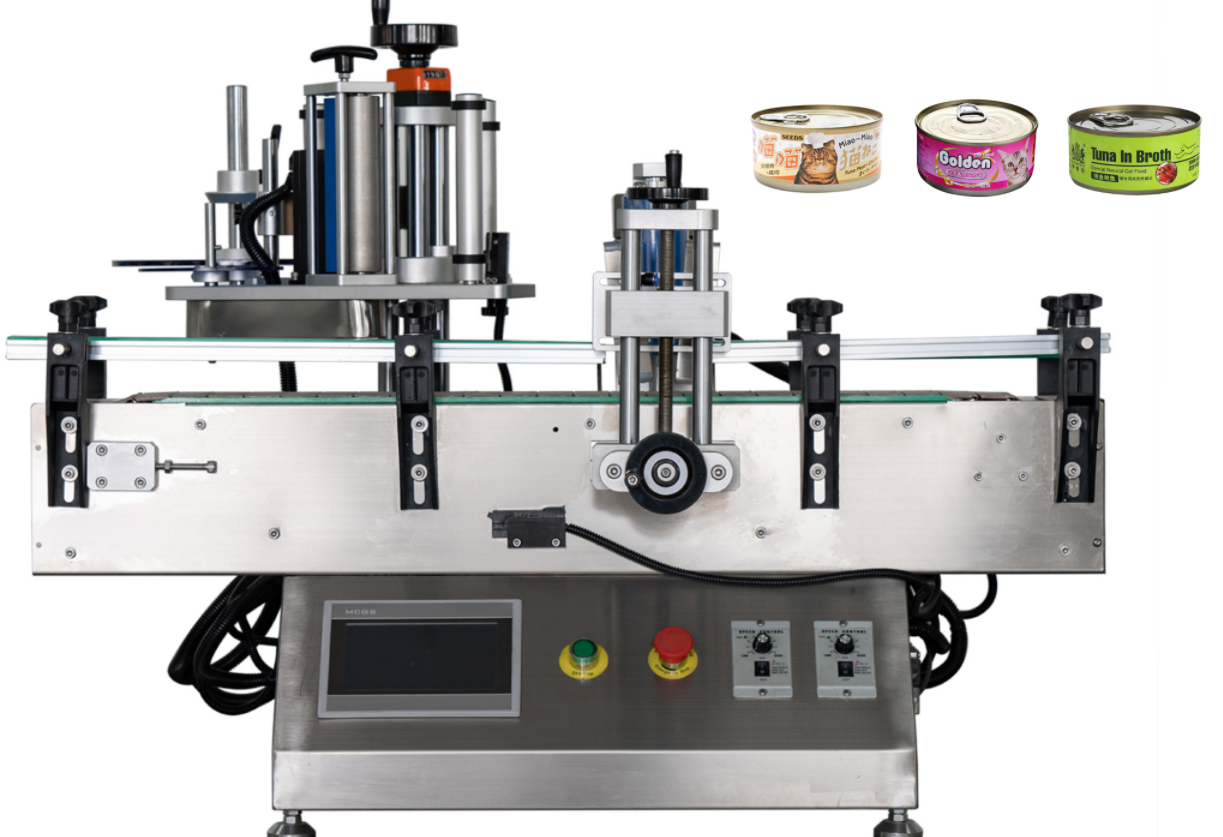
Why Benchtop Cylindrical Bottle Labeling Systems Excel for Small-Batch Flexibility
The Limitations of Standard Automation in Low-Volume Environments
The old school labeling systems just don't work well when producing small batches. Setup takes forever, everything is super rigid, and they need all sorts of special tools. Not practical at all for anything below 500 units really. The downtime from switching between products costs factories around 740 thousand dollars each year according to Ponemon's research from last year. Plus these traditional setups eat up valuable factory floor space. And let's face it, they struggle badly when companies need to rotate SKUs frequently or bring out those limited edition items that everyone wants but only for a short time.
Core Design Traits: Rapid Changeover, Bottle-Size Adaptability, and Minimal Footprint
Benchtop cylindrical bottle labeling systems overcome these constraints through three purpose-built innovations:
- Rapid changeover: Switch between label types in under 3 minutes—no tools required
- Bottle-size adaptability: Adjustable guides and sensors support diameters from 1" to 4"
- Minimal footprint: Units occupy less than 2.5 sq ft—80% smaller than industrial alternatives
This architecture enables craft beverage producers to label 15–45 bottles per minute with 99.2% placement accuracy, eliminating bottlenecks without over-engineering low-volume workflows.
Benchtop Cylindrical Bottle Labeling System Performance: Balancing Speed, Precision, and Human Workflow
Debunking the 'Labeling Speed Paradox': Why 15–45 Units Per Minute Is Optimal for <500 Units/Day
The big industrial labeling machines promise speeds from 100 to 200 units per minute, which really sets unrealistic expectations for folks running small batch operations. But when we look at what actually happens on the shop floor, manual labeling only manages around half a unit to one unit per minute. That means spending several hours just to label 100 products. The problem with going all-in on high speed automation? It brings way too much expense, headaches integrating everything, and ends up sitting unused most days when production stays below 500 units daily. Enter the benchtop cylindrical bottle labeling solution working comfortably between 15 and 45 UPM. This middle ground matches up nicely with how humans naturally work through their production cycles. Operators can load bottles while simultaneously checking quality and preparing secondary packaging without wasting time waiting for machines or feeling rushed. Think about it this way:
- Manual labeling: 30–60 minutes per 50 units
- Industrial systems: 50 units labeled in under 30 seconds
- Optimal benchtop: 50 units labeled in 1.5–3 minutes
This "Goldilocks zone" prevents over-automation while eliminating manual errors. Precision remains uncompromised: modern benchtop systems achieve ±0.5mm accuracy via servo-controlled application rollers. The result is 85% faster than manual methods—with none of the 300–500% cost premium of industrial solutions.
Choosing the Right Benchtop Cylindrical Bottle Labeling System: From Entry-Level to Integrated Print-and-Apply
Entry-Level Options (e.g., Dymo, Brother) vs. Purpose-Built Benchtop Cylindrical Bottle Labeling Systems
Entry-level printers like Dymo or Brother offer low upfront costs ($200–$500), but they lack the mechanical precision needed for cylindrical bottles—especially full-wrap applications—leading to inconsistent adhesion, skew, and misalignment. Purpose-built benchtop cylindrical bottle labeling systems resolve these issues with engineered features:
- Vacuum-assisted belts that secure containers during rotation
- 3-point alignment guides for repeatable positioning
- Adjustable mandrels accommodating diameters from 1" to 4"
While entry-level units manage under 20 bottles/hour, purpose-built systems deliver 30–45 bottles/hour at 99%+ accuracy—reducing mislabeled products by 70% compared to manual methods (Packaging Digest 2023). For batches exceeding 50 units, operational efficiency gains offset their higher initial investment ($3k–$8k) within 6–12 months.
When to Upgrade: Evaluating ROI for Hybrid Desktop Print-and-Apply Systems in Sub-50-Unit Batches
Hybrid print-and-apply systems integrate thermal printing and label application into a single benchtop unit—eliminating pre-printed label inventory and enabling true on-demand customization. For sub-50-unit batches, ROI hinges on three measurable factors:
| Factor | Entry-Level System | Hybrid System |
|---|---|---|
| Changeover Time | 15–20 minutes | <5 minutes |
| Label Waste Rate | 12–18% | 3–5% |
| Labor Cost/50 Units | $18.50 | $6.80 |
Source: Small-Batch Production Efficiency Report 2024
A craft brewery adopting a hybrid system reduced monthly operating costs by $740 (Ponemon 2023) through lower waste and labor savings. Upgrade when:
- Batch frequency exceeds 3x weekly
- Container variations require daily changeovers
- Custom labels demand real-time printing
The breakeven point typically occurs at 1,200–1,500 units—making hybrids viable even for micro-operations.
Real-World Validation: Case Study of the ELF-50 Benchtop Cylindrical Bottle Labeling System in Craft Beverage Production
One small craft brewery in the heartland was struggling with label application problems, losing around 12% of labels when things got busy at harvest time. They installed this compact ELF-50 benchtop labeling machine for their round bottles and saw dramatic improvements. Now they hit about 98.4% accuracy on both those little 8 ounce samples and standard 750ml bottles without having to stop everything for recalibrations. The semi automatic setup can handle roughly 30 bottles a minute which works well since most days they only need to fill about 200 units total. Better precision cut down on wasted materials by about 15% annually and took away those frustrating manual steps that slowed everyone down. Staff could switch between different bottle sizes in just over 5 minutes thanks to those easy to adjust knobs. Within 14 months, the brewery had paid back what they spent on the equipment through saved labor costs and less wasted product. This shows how these specialized benchtop systems actually pay off for smaller operations that don't produce hundreds of units every day.
FAQ Section
Q: What is the main advantage of using benchtop cylindrical bottle labeling systems?
A: The main advantage is their flexibility in labeling small batches efficiently, with rapid changeover capabilities, adaptability to various bottle sizes, and a minimal footprint.
Q: Are benchtop systems suitable for small businesses?
A: Yes, benchtop systems are particularly suitable for small businesses as they are cost-effective, optimize workflow, and reduce labeling errors compared to both manual and industrial systems.
Q: How do hybrid systems benefit small batch production?
A: Hybrid systems integrate printing and application in one unit, reduce label waste, allow for real-time customization, and lower operating costs, making them ideal for small batch scenarios.
Table of Contents
- Why Benchtop Cylindrical Bottle Labeling Systems Excel for Small-Batch Flexibility
- Benchtop Cylindrical Bottle Labeling System Performance: Balancing Speed, Precision, and Human Workflow
- Choosing the Right Benchtop Cylindrical Bottle Labeling System: From Entry-Level to Integrated Print-and-Apply
- Real-World Validation: Case Study of the ELF-50 Benchtop Cylindrical Bottle Labeling System in Craft Beverage Production