EN
EN

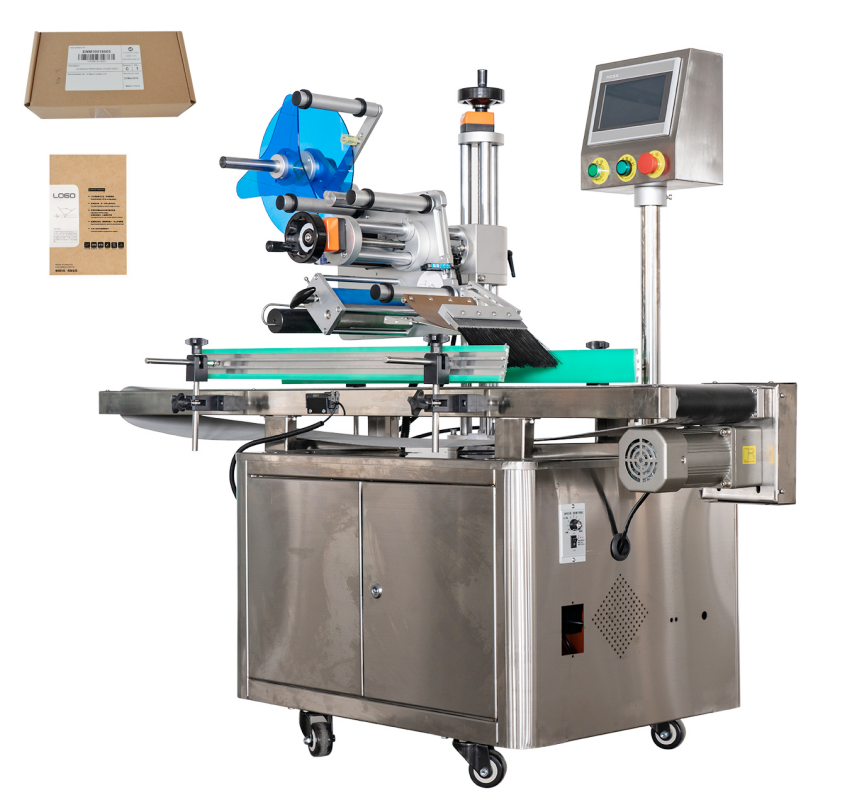
How Benchtop Top Label Applicator Machines Work and Where They Excel
Benchtop label applicators handle the job of putting labels exactly where they need to go on the tops of containers, which works great for smaller production runs. These little machines fit right into tight spaces at factories, and they come in two main types: ones that use air pressure to stick labels on (called blow-on), and others that press them down with a mechanical pad (known as tamp-on). What makes these devices so valuable is how they cut down on mistakes that happen when people do the labeling by hand. Instead of relying on workers who might get tired or distracted, these machines apply labels consistently fast, which means production lines don't have to slow down waiting for someone to affix each label properly.
Core Functionality: Automation of Top-Label Placement on Small-Scale Production Lines
Operating via sensors that detect product position, benchtop systems dispense pre-printed labels from rolls and apply them to container lids, caps, or flat tops at speeds exceeding 1,200 units per hour. The process involves three stages:
- Detection: Photoelectric sensors trigger the applicator upon product alignment.
- Dispensing: Labels separate from the liner using a peel plate.
- Application: Blow-on systems use compressed air for non-contact placement, while tamp-on models press labels via a foam pad. This eliminates misalignment and reduces labeling errors by up to 98% compared to manual methods.
Key Advantages: Space Efficiency, Cost-Effectiveness, and Ease of Integration
Benchtop labelers work great when there's not much room on the factory floor. They take up less than two square feet but can handle all sorts of containers from round bottles to rectangular boxes. The way these systems are built makes them easy to plug into current conveyor belts or assembly lines without having to tear everything apart and start over. When companies switch to automatic labeling instead of doing it by hand, they save money on wages and avoid those expensive mistakes that happen during manual labeling. According to Ponemon Institute research from last year, such errors actually cost manufacturers around $740,000 each year. Plus, these machines cut down on wasted labels and adhesive because they apply them so accurately. Some plants report cutting their labeling costs nearly in half compared to what they were spending before going automated.
Ideal Use Cases: When to Choose a Benchtop Top Label Applicator Over Larger Systems
Benchtop models outperform bulkier automated systems for low-to-mid volume production (under 15,000 units daily), short runs, or frequent product changeovers. They're optimal for:
- Startups requiring affordable automation
- Facilities with spatial constraints
- Operations labeling jars, tubs, or cosmetic containers with flat tops
Larger systems become cost-effective only for high-volume, single-SKU lines where benchtop throughput limits would cause bottlenecks.
Product Characteristics That Ensure Compatibility with Benchtop Top Label Applicator
Container Size and Shape: Importance of Uniform, Flat Top Surfaces
For benchtop top label applicators to work right, they need surfaces that stay flat throughout the process so labels stick properly without mistakes happening. The containers themselves matter too. Most manufacturers look for items where heights don't vary much, usually no more than half a millimeter difference from one another. And the tops shouldn't be too bumpy or rough either because this leads to problems like labels bridging across gaps or getting bubbles underneath them. Cylindrical containers tend to be best suited for these machines, but many modern systems will still handle square or rectangular packages as long as those tops lie completely flat on the surface. What really causes trouble though? Those weird shaped containers with all sorts of curves and angles. These create little pockets of air between the label and container, which eventually leads to peeling off. That's actually one of the main reasons why automated labeling systems throw away so many labels during production runs.
Material and Surface Compatibility: Ensuring Strong Adhesive Bonding
The way surfaces interact with adhesives is all about surface energy levels. For instance, LDPE and PP containers typically need some kind of flame treatment if we want them to stick properly. Glass surfaces tend to hold onto adhesives much better compared to those tricky silicone coated plastics that just don't play nice. Cleanliness matters a lot too. Any dirt or residue on container surfaces can really weaken bonds sometimes cutting effectiveness down by as much as seventy percent according to what many manufacturers have found in practice. Temperature conditions are another consideration altogether. When dealing with products stored in cold environments, standard adhesives won't cut it because they tend to crystallize over time leading to complete bond failure down the road.
Product Stability and Orientation During Labeling
Keeping things properly aligned helps avoid those pesky machine jams and incorrectly placed labels. When moving along conveyor belts, containers should stay pretty much upright - definitely not rocking back and forth more than about three degrees. For heavier stuff, we usually install some kind of guiding track system. Lighter packages sometimes need special vacuum help to keep them stable during transport. Getting rotation right matters too. Cylindrical objects especially need some sort of reference point for proper alignment, whether it's a seam line or engraved marking somewhere on the surface. And let's face it, when products aren't stable enough, this can really slow things down. Some studies show instability actually cuts efficiency by around 15% in smaller benchtop operations.
Best Label Types and Materials for Reliable Benchtop Top Label Applicator Performance
Pressure-Sensitive Labels: The Standard for Benchtop Systems
Most benchtop label applicators rely heavily on pressure sensitive labels because they just peel right off and stick without needing messy glue. When applied, these labels come away clean from their backing paper and grab onto surfaces almost immediately. That makes them work really well in those compact semi automatic labeling stations where floor space is tight. The reliability of these labels means production lines keep running smoothly whether it's cosmetics going into jars, medicine bottles getting sealed, or food products being packaged. Sure there are occasional hiccups, but overall they cut down on machine stoppages compared to other methods.
Paper vs. Synthetic Labels: Durability, Cost, and Environmental Factors
- Paper Labels: Cost-effective for dry indoor environments but vulnerable to moisture, oils, and abrasion. Ideal for short-term retail applications where budget constraints exist.
- Synthetic Alternatives: Polypropylene or polyester films offer superior resistance to chemicals, temperature shifts, and physical wear. Though 15–40% more expensive upfront, they reduce waste from label failures in harsh conditions.
Label Size Limits and Adjustability in Benchtop Machines
Benchtop label applicators typically accommodate labels between 2–6" in width, with adjustable guide rails and sensor positions to handle variations. Machines with tool-free quick-change components allow rapid transitions between product batches, maximizing throughput for small-batch producers. Oversized labels beyond 150% of standard dimensions risk jamming or misalignment.
Can Recycled Paper Labels Work? Balancing Sustainability and Reliability
Recycled paper labels can integrate sustainably with benchtop systems if surface smoothness and adhesive quality meet industrial standards. However, inconsistent fiber composition may cause wrinkles or weak bonding. For critical applications like pharmaceuticals, synthetic facestocks with 30%+ recycled content provide a compromise—retaining durability while reducing environmental impact.
Top Industries and Product Types Ideal for Benchtop Top Label Applicator Integration
Benchtop top label applicators deliver targeted solutions where space constraints and moderate production volumes intersect with labeling precision. Their compact footprint and adaptable operation make them indispensable across several key sectors requiring consistent top-surface labeling.
Cosmetics: Precision Labeling for Jars and Bottles
The way labels sit on those fancy cosmetic jars and dropper bottles really affects how people see a brand. Good benchtop labeling machines can work with all sorts of shapes - round ones, square ones too - as long as they're not bigger than 6 inches across. These machines get pretty accurate too, within half a millimeter most of the time. That kind of precision makes sure products look top shelf when they hit store shelves or customer bathrooms. The best part? They apply labels so gently that there's no sticky residue left behind on fancy coatings. And let's face it, Package Digest reported back in 2023 that nearly four out of five shoppers actually link good label quality to whether they trust what's inside the bottle. Makes sense really.
Pharmaceuticals: Compliance, Legibility, and Accuracy
Pharmaceutical labeling just can't be ignored because of all the regulations out there. The benchtop applicators we've been using keep those dosage instructions and batch codes readable on about 99.8% of pill bottles and vial caps. These machines come equipped with PLCs that spot and toss out any labels that aren't properly aligned. This helps meet those 21 CFR Part 11 rules about keeping track of everything through audits. And let's face it, this matters a lot since wrong labels are responsible for roughly one third of all medication mistakes according to FDA data from 2022.
Food and Beverage: Jars, Tubs, and Lid-Based Applications
Benchtop labeling machines work great for all sorts of containers, from those fancy artisanal jam jars right down to standard yogurt tubs. They come with tooling that changes quickly, making them adaptable to different shapes and sizes. The blow-on applicator system is actually pretty smart because it stops labels from getting all wrinkled on those round lid surfaces something that gives manufacturers headaches when using traditional wet glue methods. For smaller operations running at around 50 items per minute or less, switching to these benchtop units cuts labeling expenses roughly 40% compared to full automation setups. Plus they're flexible enough to handle those seasonal product changes without needing major equipment overhauls.
Electronics: Challenges in Labeling Small or Irregular Components
While benchtop applicators excel with flat surfaces, labeling irregular components like circuit boards requires specialized solutions. Components under 1cm² often need vacuum-assisted tamping heads unavailable in standard configurations. For heat-shrink tubes and angled surfaces, manufacturers report 25% higher error rates versus flat-top applications, necessitating custom engineering (Industrial Labeling Journal 2023).
Optimizing Workflow: Matching Benchtop Top Label Applicator to Production Needs
Semi-Automatic vs. Fully Automated: Choosing Based on Volume and Labor
The choice between semi automatic and fully automatic benchtop label applicators really comes down to what kind of volume needs to be handled and how many workers are available. The semi auto versions work best when dealing with smaller batches under 500 items per hour, since someone still needs to place each item manually. These tend to be good options for new businesses getting started or companies running occasional production runs. On the other hand, full automation can manage over 1000 units every hour thanks to built in conveyor belts. According to recent industry data from Packaging Efficiency Report 2023, this cuts down on staffing expenses somewhere around 30 to 50 percent. Most manufacturers find that investing in automation starts paying off after about a year or so, mainly because there are fewer mistakes made during labeling and the finished products come out looking much more uniform across the board.
Blow-On vs. Tamp-Apply: Which Method Suits Your Products Best?
Application methods directly impact labeling precision:
| Method | Best For | Speed Range | Surface Compatibility |
|---|---|---|---|
| Blow-On | Lightweight containers | 60–100 labels/min | Flat, non-porous tops |
| Tamp-Apply | Irregular shapes/textured surfaces | 40–70 labels/min | Curved, recessed areas |
Blow-on uses air pressure for rapid labeling of jars and tubs, while tamp-apply employs mechanical pads for contoured cosmetics compacts or pharmaceutical vials. Match method to surface geometry to prevent misalignment.
Maximizing Efficiency: Synchronizing Labeling with Product Flow
Integrate your benchtop applicator with production lines using:
- Photo-eye sensors triggering label dispensing at ±2mm accuracy
- Speed-matching conveyors avoiding bottlenecks
- Reject arms removing mislabeled items automatically
This synchronization cuts idle time by 25% and maintains 99.5% application accuracy. Ensure PLC compatibility with upstream and downstream equipment for seamless material handling.
Frequently Asked Questions about Benchtop Top Label Applicators
What types of labels work best with benchtop top label applicators?
Pressure-sensitive labels are ideal for benchtop top label applicators due to their ease of application and reliable adhesive properties.
Are benchtop top label applicators suitable for high-volume production lines?
No, benchtop models are best for low-to-mid volume production, typically handling less than 15,000 units daily.
How do container shape and size affect the performance of benchtop applicators?
Benchtop applicators perform best with containers having uniform, flat top surfaces, reducing the risk of labeling errors caused by irregular shapes.
Can recycled paper labels be used with benchtop label applicators?
Yes, recycled paper labels can be used if they meet industrial standards for smoothness and adhesive quality.
Table of Contents
- How Benchtop Top Label Applicator Machines Work and Where They Excel
- Product Characteristics That Ensure Compatibility with Benchtop Top Label Applicator
- Best Label Types and Materials for Reliable Benchtop Top Label Applicator Performance
- Top Industries and Product Types Ideal for Benchtop Top Label Applicator Integration
- Optimizing Workflow: Matching Benchtop Top Label Applicator to Production Needs
- Frequently Asked Questions about Benchtop Top Label Applicators