EN
EN

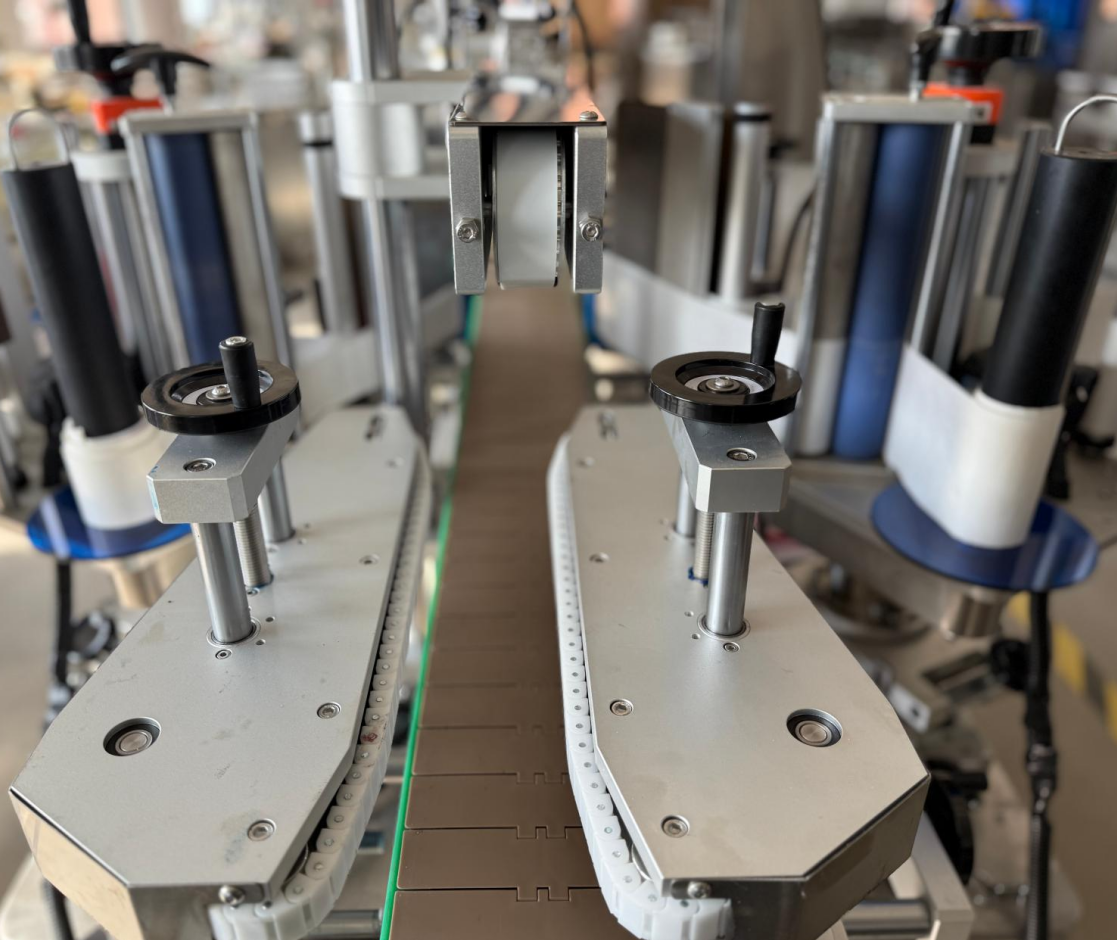
Doubling Throughput with Simultaneous Dual-Side Labeling
Elimination of Sequential Labeling Steps
The old way of labeling products needs two separate steps for front and back applications, which causes problems like extra handling time, misalignment issues, and unnecessary machine parts. With simultaneous dual side labeling, everything changes because special heads work together to put on both labels at once during just one movement across the product. No need to move things around again, so handling time drops about 50%, and there's roughly 40% less complicated machinery involved. Production speeds go up right away too, all while keeping the same space requirements and power consumption levels as before.
Parallel Processing Cuts Cycle Time by Up to 65%
What makes this system so much faster is how it actually works in parallel instead of one step after another. The labels get applied at the same time because there are separate heads working independently. According to industry standards, this cuts down on processing time by around 60 to 65 percent when compared to older sequential methods as noted in the Packaging Efficiency Report from last year. Take a production line making 200 items every minute for instance. With this new approach, factories can produce nearly 8,000 extra products each hour. Another benefit worth mentioning is that spreading out the workload between two heads means less wear and tear on the machinery. Maintenance needs drop by about 30% when looking at systems with just one head trying to do the same amount of work.
Case Study: Beverage Bottler Reaches 420 Bottles per Minute
When a midwestern soft drink company swapped out their old sequential labeling setup for a modern automatic two-side labeler, they saw incredible results. The new machine could handle 420 bottles per minute, which is actually pretty impressive considering it was way above the previous limit of just 250 bottles a minute. That's a jump of around 68%, something most manufacturers would be thrilled about. Label misalignments also took a big hit, going down from 3.2% errors to nearly perfect placement within plus or minus 0.4 mm. What really stands out though is how versatile the system proved to be. No need for any mechanical tinkering when switching between different bottle sizes ranging from 60mm to 100mm in diameter. This flexibility allowed them to run production continuously for 18 straight hours without losing accuracy. And all these improvements paid off financially too. The company recouped their investment in just 19 months thanks to reduced labor costs and better product yields.
Integration of Multi-Axis Synchronization and Vision-Guided Registration
Getting high speed accuracy right depends on really tight coordination between five different moving parts: the conveyor drive system, plus two separate label dispensers working together with those twin applicator arms. The whole setup uses real time encoder feedback so everything stays aligned inside these super short 2 millisecond timing windows. There's also this amazing 500 frames per second vision system constantly tracking where products are located, which lets the machine adjust parameters on the fly as needed. What makes it work so well is this closed loop design that actually accounts for small vibrations in the conveyor belt (about half a millimeter up or down) and any changes in how containers are positioned. The result? An impressive 99.98 percent success rate when placing labels on 500 items every minute. And even better, the system keeps things registered within just 0.3 mm tolerance while avoiding all that wasted material from stretched labels.
Reduction in Labor Costs and Operational Headcount
Automation Reduces Operator Requirement from 3 to 1 per Line
Automatic two side label applicators let one person handle what used to take three workers doing manually. The big drop in staff numbers comes from getting rid of all that hand placement work, figuring out where labels go, and checking them visually for mistakes. Instead of letting those people just sit around, companies send them to do better things like actually catching problems before they happen rather than after. When we look at the bigger picture, these hidden savings often end up being worth about 30 to maybe even 40 percent more than just what someone gets paid when everything is done by hand. Training new folks, paying for benefits, dealing with workplace injuries—all those extra costs start to disappear too.
Labor Savings Contribute 38–45% to Total ROI
When it comes to return on investment, labor optimization takes the cake, making up roughly between 38% and 45% of all savings in most cases. The main reasons? Companies need fewer staff hours during shifts, there's no more paying overtime, and fixing mistakes becomes much less time consuming. Throw in those material cost reductions and better machine availability, and we're talking about payback times that typically stay below 18 months across different industries. Manual processes just can't compete with this kind of stability. Automated labeling systems shield manufacturers against unpredictable labor costs and workforce fluctuations. This means businesses can plan their budgets with confidence and keep running smoothly even when the economy throws curveballs nobody saw coming.
Precision Automation Minimizes Label Wastage and Placement Errors
Achieving ±0.3 mm Accuracy Reduces Material Waste
Dual-side systems deliver consistent ±0.3 mm placement accuracy—preventing misaligned labels that trigger costly rework or rejection. First-pass success becomes the norm, directly lowering consumable waste.
Closed-Loop Tension Control Prevents Stretch and Misalignment
Real-time tension monitoring dynamically adjusts label feed speed and pressure during application. This prevents stretching, wrinkling, or edge lifting—especially critical for high-speed, full-wrap, or specialty-adhesive applications.
Wastage Drops from 4.7% to 0.9% with Automatic Two-Side Label Applicator
Looking at operational figures, we see material waste dropping dramatically from the typical industry level of around 4.7 percent down to only 0.9 percent. That's roughly an 80 percent cut in waste over time. There are actually three main reasons for this improvement. First off, there's no more variation caused by people placing things manually. Second, our system uses vision guidance to fix those tiny alignment issues as they happen in real time. And third, pressure gets applied evenly on both sides at the same moment. With all these factors working together, the automatic double sided label applicator turns precision work into real money savings. Every single label that doesn't get wasted translates directly into profit for the business.
Sustaining High-Speed Production Without Sacrificing Accuracy
Maintaining Alignment at Speeds Up to 500 Products per Minute
Today's automatic two side label applicators maintain around 0.3 mm registration accuracy even when running at speeds of 500 units per minute. These machines rely on synchronized servo systems, high resolution encoders, plus real time vision correction technology working in concert. When products pass through the labeling area, dual axis sensors spot any position shifts and tweak the applicator heads almost instantly. This happens so fast it cancels out vibrations from the conveyor belt and handles variations between different products. For industries such as pharmaceutical manufacturing or food packaging where every label must be perfectly readable and meet strict regulations, this kind of precision simply cannot be compromised. The difference between good enough and absolutely perfect matters when dealing with regulatory requirements and quality standards.
Balancing Peak Speed and Full Label Density: Real-World Limitations
The machine is technically capable of handling over 500 units per minute, but what actually gets done in practice varies quite a bit depending on the shape of the labels and how well the adhesive works. When it comes to full wraparound sleeve labels, they just take longer to apply compared to simple front or back labels because of how the glue sets up. Most beverage companies find that around 350 to 400 bottles per minute is about right for those 360 degree sleeves if they want to avoid problems with edges coming loose. Things get even trickier when dealing with rough surfaces like frosted glass bottles which can cut down on speed by roughly 15 to maybe 20 percent compared to smooth plastic containers. At the end of the day, manufacturers need to decide whether they want faster production or more complex labeling designs since trying to do both at once tends to lead to issues where labels don't stick properly more than 2% of the time according to Packaging Digest last year.
FAQ Section
What is simultaneous dual-side labeling?
Simultaneous dual-side labeling is a method where two labels are applied to a product at the same time, one on each side, reducing handling time and equipment complexity.
How does dual-side labeling improve production efficiency?
By applying labels simultaneously with independent heads, dual-side labeling cuts processing time significantly and increases production speed while minimizing machinery wear and maintenance costs.
What kind of companies might benefit from this dual-side labeling technique?
Companies in beverage bottling, pharmaceutical manufacturing, food packaging, and similar industries can benefit greatly from dual-side labeling by achieving higher throughput with reduced labor costs.
Can dual-side labeling handle different product sizes without adjustments?
Yes, dual-side labeling systems are designed to handle a variety of product sizes without the need for mechanical adjustments, allowing continuous production without sacrificing accuracy.