EN
EN

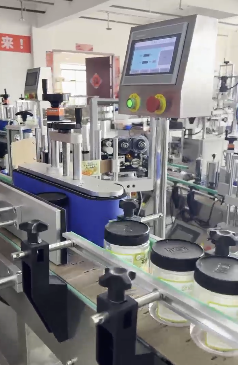
Typical Speed Ranges of Automatic Roll-On Labeling Machines
Automatic roll-on labeling machines deliver throughput from 50 to over 2000 containers per minute (CPM), with performance tiers defined by engineering design and application requirements. Industry benchmarks identify three primary classifications:
- Entry-Level Systems (50–200 CPM): Servo-driven units suited for moderate production volumes, frequent changeovers, and diverse container geometries
- Mid-Range Linear Systems (300–800 CPM): Continuous-motion platforms optimized for high-speed pharmaceutical or beverage lines handling standard containers
- High-Speed Rotary Systems (800–2000+ CPM): Turret-based configurations used in ultra-high-volume bottling plants, achieving peak speeds through parallel container processing
Most rotary systems can hit around 94 to 98 percent uptime when everything runs smoothly according to Blowing-Machine research from 2023. But in reality, most operations only reach about 70 to 90 percent of their maximum capacity because of those pesky changeovers between different product runs and inconsistent container sizes coming through the line. Looking at semi-automatic options which handle 15 to 50 containers per minute, these don't really qualify as fully automatic since operators still need to step in manually during certain parts of the process. When shopping for equipment, it's crucial to match those fancy spec sheet numbers with what actually happens on the factory floor. Going overboard on specs just burns through capital budget money that could be spent elsewhere, while picking something too small creates bottlenecks down the road when demand inevitably grows.
Key Engineering Factors That Limit Automatic Roll-On Labeling Machine Speed
Material Handling Constraints: Bottle/Container Stability and Feed Consistency
When containers come in all sorts of shapes or when they don't arrive at the same rate, this really holds back the maximum speed possible. Take those lightweight plastic bottles as an example. Plants often have to slow things down by somewhere between 15 and 30 percent just so these bottles won't fall over while moving along the conveyor belt. And then there's the problem of containers that aren't lined up properly or are spaced differently from one another. These situations cause emergency stops which can cut overall production by as much as 22% in big volume operations. Some improvements happen when companies install precision guides and use servo driven conveyors for better stability, but there are still plenty of physical constraints, particularly when dealing with packaging that doesn't follow standard specifications.
Label Application Mechanics: Adhesion Timing, Tension Control, and Roll-On Pressure Calibration
Three interdependent mechanical factors define the practical upper bound of labeling speed:
- Adhesion Timing: Labels need 0.2–0.5 seconds for full adhesive activation. Beyond ~300 BPM, bonding reliability declines significantly.
- Tension Control: High-speed unwinding demands ±2% tension precision; deviation causes wrinkles or web breaks, forcing automatic slowdowns.
- Pressure Calibration: Excessive pressure deforms labels; insufficient pressure compromises bond integrity—both necessitate conservative speed settings.
| Limiting Factor | Impact on Speed | Mitigation Approach |
|---|---|---|
| Container Stability | Reduces by 15–30% | Dynamic weight sensors |
| Label Tension Variance | Forces 10–20% BPM drop | Servo-controlled dispensers |
| Adhesion Window | Caps at 300–350 BPM | Thermo-activated adhesives |
Speed vs. Performance: How Throughput Relates to OEE in Automatic Roll-On Labeling Operations
Why Peak BPM Doesn’t Equal Real-World Output: Downtime, Changeovers, and Reject Rates
Peak speeds—such as 300 bottles per minute—advertised for automatic roll-on labeling machines rarely reflect sustainable line output. True productivity is governed by OEE (Overall Equipment Effectiveness), which integrates availability, performance, and quality. Three persistent gaps erode theoretical capacity:
- Downtime: Unplanned stops for jams or maintenance reduce availability. A machine running at 90% of rated speed but halted 15% of shift time achieves just 76.5% effective availability.
- Changeovers: Switching container sizes or label types can idle lines for 20+ minutes—especially costly when performed multiple times per shift.
- Reject rates: Misapplied labels caused by tension errors or adhesive failure generate waste. A 2% defect rate means 20 reworks per 1,000 units.
OEE quantifies this gap:
OEE = Availability à Performance à Quality For instance, a machine with 85% availability, 90% performance efficiency, and 98% first-pass yield delivers a 75% OEE—25% below its peak-rated output. Prioritizing OEE optimization over maximum BPM ensures long-term operational resilience and cost efficiency.
Selecting the Right Automatic Roll-On Labeling Machine for Your Line Speed Requirements
Matching Servo-Driven vs. Mechanical Systems to Product Mix and Changeover Frequency
The choice between servo-driven and mechanical automatic roll-on labeling machines hinges on production variability—not just headline speed:
- Servo-driven systems excel in high-changeover environments. Programmable logic controllers enable dynamic adjustment of label placement, tension, and timing—reducing format change time by 40–70% versus mechanical equivalents. This agility supports diverse container shapes, seasonal label updates, and short-run SKUs.
- Mechanical systems achieve higher peak speeds (typically 200–400 BPM) for uniform, high-volume runs but lack flexibility. Fixed cam mechanisms require manual recalibration for new formats—increasing downtime and labor during transitions.
If an operation deals with more than about 15 different products each week or finds itself spending around 8% or so of planned production hours just switching between items, then servo technology becomes worth considering. On the flip side, when everything runs smoothly with one product day after day in round-the-clock operations, mechanical systems tend to give better overall results. What makes servos stand out is their ability to boost net output by roughly 15 percent in facilities that handle multiple products at once. This happens even though they might not hit those top speed numbers during brief bursts. The real advantage comes from keeping overall equipment effectiveness high thanks to quicker transitions between products that actually work reliably most of the time.
FAQ Section
What are the speed ranges for automatic roll-on labeling machines?
Automatic roll-on labeling machines range from 50 to over 2000 containers per minute, with entry-level systems handling 50–200 CPM, mid-range systems managing 300–800 CPM, and high-speed rotary systems achieving 800–2000+ CPM.
What factors affect the speed of a roll-on labeling machine?
Factors limiting speed include container stability and feed consistency, label adhesion timing, tension control, and pressure calibration. These elements influence the machine's capability to handle maximum speeds efficiently.
How does OEE influence the performance of automatic labeling machines?
Overall Equipment Effectiveness (OEE) measures true productivity by considering availability, performance, and quality. It underscores that peak BPM doesn't necessarily reflect sustainable output due to downtime, changeovers, and reject rates.
When should a servo-driven system be chosen over a mechanical one?
Servo-driven systems are preferable for high-changeover environments with varied products and frequent label updates. Mechanical systems suit high-volume, uniform production with fewer changes.
Table of Contents
- Typical Speed Ranges of Automatic Roll-On Labeling Machines
- Key Engineering Factors That Limit Automatic Roll-On Labeling Machine Speed
- Speed vs. Performance: How Throughput Relates to OEE in Automatic Roll-On Labeling Operations
- Selecting the Right Automatic Roll-On Labeling Machine for Your Line Speed Requirements
- FAQ Section