EN
EN

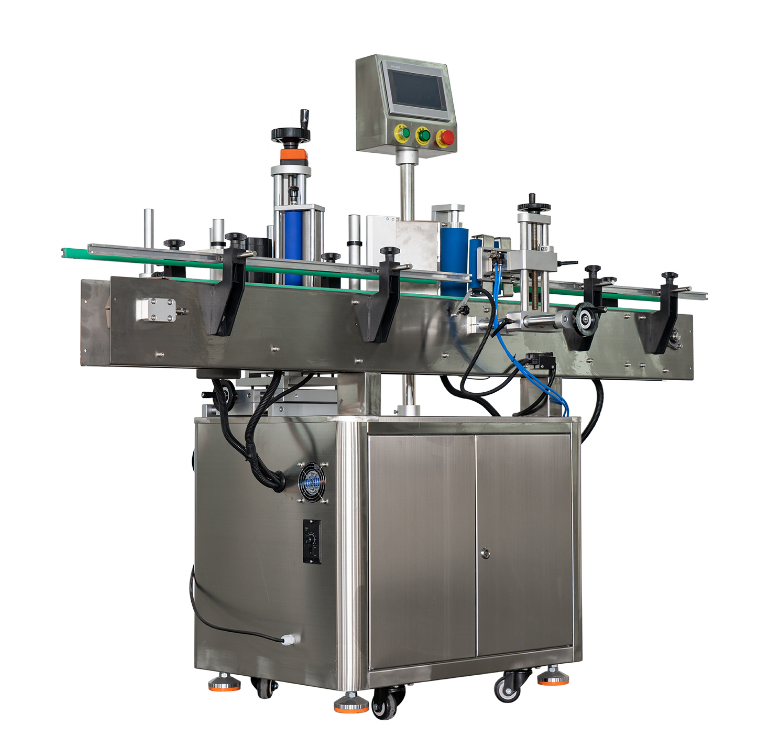
Next time you watch bottles fly down a packaging line at hundreds per minute and every single label lands in the exact same spot, you are witnessing something pretty remarkable. That level of precision is not luck. It is the result of two technologies that have become inseparable from modern labeling: optical sensors acting as the sharp eyes, and servo motors acting as the fast-twitch muscles. Alone, each one is useful. Together, they form a feedback loop so tight and responsive that label placement errors shrink to a fraction of a millimeter even when the line is running flat out. Once you understand how this partnership actually works, it is hard to look at a labeling machine the same way again.
What optical sensors actually detect when the line is running
People often think of an optical sensor as a simple beam that gets broken when something passes in front of it. In a labeling machine, the reality is far more layered. Some sensors track the leading edge of a container as it enters the labeling zone, timing the exact moment when the product will be in position. Others focus on the label web itself, reading registration marks printed on the liner or detecting the subtle difference in translucency between the label material and the gap between labels. A slot type photoelectric sensor, for instance, can tell the difference between a label and a label gap by how much light each one lets through. That is how the machine knows exactly where one label ends and the next one begins.
These sensors are not just on-off switches. They generate signals at extremely high frequencies. In high-speed food and beverage applications, a registration mark sensor can fire off readings at 10 kHz, which means 10,000 actuations every second. At that speed, even a label web moving at breakneck pace does not sneak past undetected. The sensor captures the precise position of every registration mark, every container edge, and every label gap. That stream of positional data becomes the foundation upon which the servo motor builds its every move.
How servo motors convert sensor signals into split-second adjustments
If the optical sensor is the eyes, the servo motor is the muscle with an exceptional memory. Unlike simpler motors that spin blindly and hope for the best, a servo motor constantly listens to its own encoder. It knows its exact rotational position at all times, down to a fraction of a revolution. When a sensor signal arrives saying a container has reached the labeling point, the servo does not just start spinning. It calculates exactly how far it needs to move the label web so that the label meets the container at the right spot, and it hits that target with repeatable precision.
What makes this partnership so effective is the feedback loop. The servo motor receives a command, executes the movement, and the encoder reports back the actual position it reached. If there is any deviation, the drive instantly corrects it by adjusting current and torque on the fly. This happens continuously, thousands of times per minute. A high-resolution encoder capable of more than 2000 pulses per revolution gives the drive extremely fine position control, so a label web that needs to advance exactly 50 millimeters actually moves exactly 50 millimeters, not 50.5 and not 49.5. Over an eight-hour shift and tens of thousands of labels, that closed-loop discipline stops small errors from piling up into big ones.
The dance between product detection and label release timing
Timing the release of a label to a moving container is where things get especially tricky. The container is traveling down a conveyor at speed, and the label needs to meet it at precisely the right moment. Too early, and the label wrinkles or sticks to itself. Too late, and the label misses the target entirely. This is where the sensor-servo duo really proves its worth.
A product sensor detects the leading edge of a container and sends a trigger signal. But the label is not dispensed immediately. The system calculates a precise delay based on the conveyor speed and the distance from the sensor to the peel plate. During that delay, the servo motor accelerates the label web so that by the time the container arrives, the label is peeling off the liner at exactly the right speed to be pressed onto the surface smoothly. The label and the container move in sync for that critical moment of contact. This synchronization, often called electronic gearing, is something a servo does natively. The sensor provides the timing reference, and the servo executes the motion profile with acceleration and deceleration curves that protect both the label and the placement accuracy.
Why closed-loop feedback eliminates drift that ruins placement
Open-loop systems, where a motor spins a set number of steps without checking whether it actually got there, have a well-known problem. Over time, small errors accumulate. A sticky label liner, a change in humidity that alters friction, a slight voltage fluctuation. Any of these can cause the motor to lose a step here and there. By the end of a shift, the label position has drifted, and nobody noticed until the quality check starts rejecting product.
Servo motors with encoder feedback eliminate this entirely. If a label web resists slightly because the adhesive is tackier than usual, the encoder detects the resulting position lag within microseconds. The drive immediately compensates by delivering more torque. The label still lands exactly where it is supposed to. This real-time correction loop keeps placement accuracy within plus or minus 0.5 millimeters on a well-engineered automatic roll-on labeling machine, even after thousands of cycles. The optical sensor verifies that each label arrives at the peel point when expected, and the servo guarantees the distance traveled matches the commanded value. No mystery, no drift, just repeatable precision all day long.
How sensor and servo technology handles line speed changes gracefully
Production lines rarely run at one steady speed forever. A filler might slow down momentarily. A backlog might clear, allowing the conveyor to accelerate. Traditional mechanical labeling systems struggle with these speed swings because their timing is tied to physical linkages and cams. A sensor-servo system handles them differently. The optical sensor continuously monitors the actual speed of containers passing through the labeling zone. The servo drive uses this real-time velocity data to adjust the label feed rate dynamically. If the line speeds up, the servo accelerates the label web proportionally. If it slows down, the servo decelerates. The label always meets the container at the same relative speed, which is the secret to bubble-free, wrinkle-free application. This adaptive capability means that a modern automatic roll-on labeling machine can maintain consistent placement quality across a wide speed range, accommodating the natural rhythm fluctuations of a busy packaging hall without requiring manual intervention or recalibration.
Automatic correction features that prevent waste before it happens
The best sensor-servo systems are not just reactive. They are preventative. Some setups use a dual-sensor architecture: one sensor watches the container position, while a second watches the label web directly. When the web sensor detects that a label is missing or damaged, the system skips that cycle entirely rather than applying a bad label to a good product. The servo motor simply does not advance the web for that container. This prevents the waste of both the label and the container. Other systems use the same sensor data to perform automatic label position correction. If the sensor detects that labels are consistently landing 0.3 millimeters off target, the drive adjusts its offset automatically. Nobody has to stop the line and tweak a setting. This kind of self-correcting behavior, made possible by the tight integration of optical sensing and servo motion control, keeps reject rates low and uptime high without anyone having to stand over the machine babysitting it.
What all this means when choosing packaging equipment
When you look past the shiny stainless steel exterior of a labeling machine, what you are really evaluating is how well the eyes and the muscles talk to each other. A machine built around a true sensor-servo architecture will hold its accuracy over time, adapt to speed changes, and catch errors before they turn into waste. This is not just about technical specs. It is about what happens on the factory floor at two in the morning when nobody is watching. The partnership between optical sensors and servo motors is what keeps labels landing in the same spot shift after shift, making traceability reliable, brand appearance consistent, and production data accurate. BestPack engineers these technologies into equipment designed for real production environments, where reliability matters more than flashy features, and the machine simply needs to do its job without becoming the reason the line stops.
Table of Contents
- What optical sensors actually detect when the line is running
- How servo motors convert sensor signals into split-second adjustments
- The dance between product detection and label release timing
- Why closed-loop feedback eliminates drift that ruins placement
- How sensor and servo technology handles line speed changes gracefully
- Automatic correction features that prevent waste before it happens
- What all this means when choosing packaging equipment