EN
EN

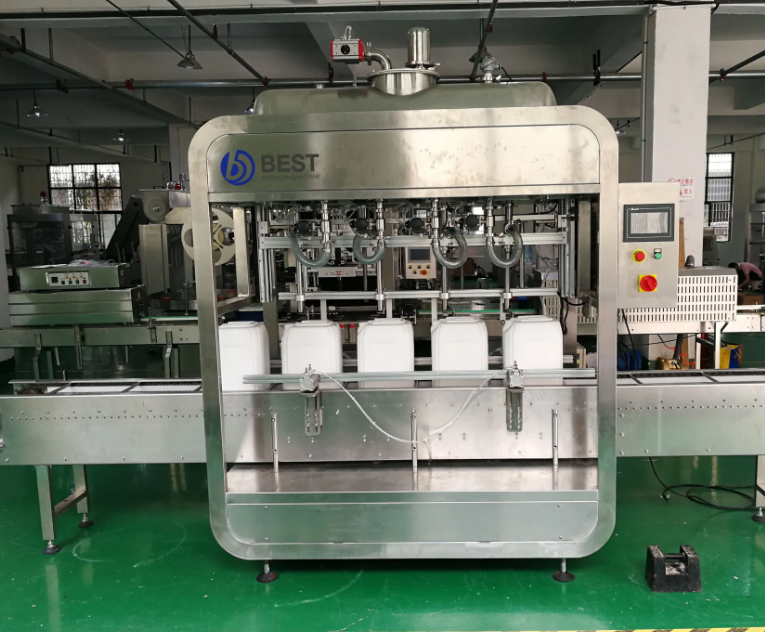
The Real Cost of "Good Enough" Filling
Walk onto almost any mid-sized cosmetics production floor, and chances are there is at least one time-pressure filler still running. These machines have been the default for decades—simple setup, relatively low upfront cost, and passable performance for watery lotions and thin serums. But passable is not the same as profitable. The shift toward multi-head weight-based liquid fillers is not just about newer technology; it is about a fundamentally different approach to what “accurate filling” actually means.
Time-pressure systems operate on a straightforward premise: hold the product at a constant pressure, open a valve for a set duration, and hope the amount that comes out matches what went in the last time. The catch is that hope is not a quality control metric. Viscosity drifts with temperature. Pump wear changes flow rates over time. Head pressure drops as the supply tank empties. Each of these variables introduces error, and those errors compound across thousands of cycles.
A multi-head weight-based filler, by contrast, does not guess. Each head has its own load cell that measures the actual weight of product entering the container in real time. The fill valve closes only when the target weight is reached—not when a timer says it should. That is the difference between assumption and measurement.
What Actually Happens Inside a Time-Pressure Filler
Time-pressure filling is essentially an open-loop system dressed up as a closed one. The machine is calibrated at the start of a run, and from that point forward, it operates on the assumption that nothing changes. Product temperature rises as the batch runs. The pump diaphragm flexes a little differently after a few hundred cycles. The filter starts to clog. All of these factors shift the relationship between time and volume, yet the machine keeps dispensing for the same number of milliseconds.
For low-viscosity cosmetics like toner or micellar water, the errors might stay within an acceptable range—say, ±1% to ±2%. But for premium products where a few grams represent real material cost, that tolerance starts to hurt. A 1.5% overfill on a 200 ml serum bottle might not sound like much until the annual production volume hits 500,000 units. That is 1,500 liters of product given away—product that was formulated, mixed, tested, and could have been sold.
Time-pressure systems also struggle with products that have any shear-thinning behavior. As the fluid moves through the valve, its viscosity changes. The timer does not know that. The load cell does.
How Multi-Head Weighing Changes the Game
Multi-head weight-based filling turns the entire logic upside down. Instead of controlling the input and hoping for the right output, it measures the output and adjusts the input accordingly. Each filling head operates independently, with its own high-precision load cell and a dual-speed fill valve.
The sequence is telling: fast fill moves most of the product in quickly, then the system switches to a slow, fine-flow mode to hit the exact target weight. The load cell feeds continuous weight data back to the PLC, which modulates the valve position in real time. If the flow is running a little heavy, the valve adjusts earlier. If it is running light, it stays open a fraction longer. Every container gets individual treatment based on what is actually happening in that moment.
That is the core advantage: closed-loop control versus open-loop approximation. The difference shows up not just in average accuracy but in consistency across the entire run. A weight-based system does not drift as the day goes on. It does not care if the batch temperature changes by a couple of degrees. It responds.
The Viscosity Problem That Time-Pressure Fillers Cannot Solve
Cosmetic formulations are notoriously inconsistent from a filling perspective. A lotion that flows beautifully at 25°C turns sluggish at 20°C. A serum that pumps cleanly when the filters are fresh starts to cavitate as they load up. Time-pressure fillers have no way to detect or correct for these shifts.
Time-pressure fillers leave viscosity drift uncorrected with fixed timer settings, fail to compensate for temperature variation, generate progressive overfill from long-term pump wear, and cause gradual underfill as filters clog, delivering typical accuracy of only ±1% to ±2%. In comparison, multi-head weight-based fillers adopt real-time weight feedback to compensate viscosity and temperature changes, eliminate running drift via independent single-bottle measurement, and maintain stable filling targets through dynamic adjustment, achieving high precision accuracy of ±0.1%.
A cosmetics manufacturer that switched from time-pressure to multi-head weighing on a shampoo line reported that the standard deviation of fill weights dropped by more than 60% within the first week. The time-pressure system had been producing acceptable average fills, but the spread was wide enough that the target weight had to be set artificially high to avoid underfills. The weight-based system tightened the distribution so much that the setpoint could be lowered by nearly 1.5%, saving thousands of dollars in raw material over a single quarter.
When Time-Pressure Still Makes Sense (and When It Does Not)
To be fair, time-pressure fillers are not obsolete. For very low-viscosity, non-foaming liquids where the material cost is minimal and regulatory tolerances are wide, they remain a cost-effective choice. A water-based toner or a basic cleansing solution might not justify the additional investment in a multi-head system.
But for any cosmetic product where the formulation cost matters—serums, creams, specialty lotions, anything with active ingredients—the math shifts quickly. The higher the product value per kilogram, the faster a weight-based system pays for itself through giveaway reduction alone. That is before even factoring in the reduced rework, fewer customer complaints about fill levels, and the ability to run closer to the declared net weight without fear of regulatory violations.
NIST Handbook 133 and EU Directive 76/211/EEC both set clear rules about average fill quantities and acceptable underfill rates. Running a time-pressure system with significant variability means either accepting giveaway or risking non-compliance. Weight-based filling removes that trade-off entirely.
The Bottom Line on Cosmetic Filling Technology
The superiority of multi-head weight-based filling for cosmetics comes down to one thing: measurement beats assumption. Time-pressure fillers guess based on settings; weight-based fillers know based on data. For products where every gram represents formulated value, that distinction is worth real money.
The technology is mature, the reliability is proven, and the return on investment is straightforward to calculate. Any production manager running high-value cosmetics through a time-pressure system should run the numbers on giveaway alone—the answer is usually surprising, and rarely in favor of the status quo.
Table of Contents
- The Real Cost of "Good Enough" Filling
- What Actually Happens Inside a Time-Pressure Filler
- How Multi-Head Weighing Changes the Game
- The Viscosity Problem That Time-Pressure Fillers Cannot Solve
- When Time-Pressure Still Makes Sense (and When It Does Not)
- The Bottom Line on Cosmetic Filling Technology