EN
EN

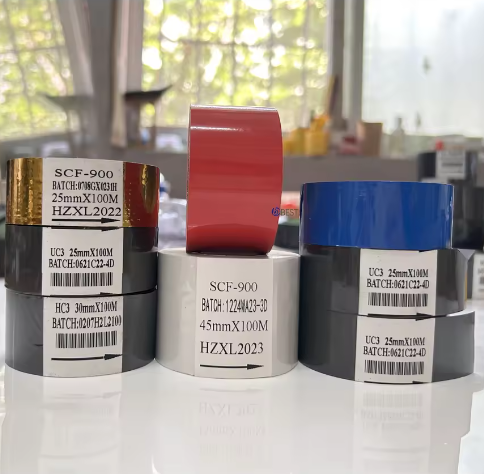
Temperature and Humidity Control: The Core Drivers of Coding Foil Ribbon Stability
Why 15–25°C and 40–60% RH Maximizes Coding Foil Ribbon Shelf Life
Keeping coding foil ribbon stored between around 15 to 25 degrees Celsius with humidity levels somewhere between 40 and 60 percent helps avoid problems like wax crystallization when temps drop below 20°C and keeps the resin adhesive from breaking down when it gets too hot above 28°C. Facilities that follow these guidelines see roughly a 60-65% drop in print failures according to recent quality audits conducted last year under ISO/IEC 15416 standards. When there's too much moisture in the air, ribbons tend to curl up which adds about 15% more defects for every 5% increase beyond recommended humidity levels. On the flip side, if the environment is too dry, static electricity builds up causing the ribbon to lose grip during unwinding processes, leading to all sorts of printing issues.
How Temperature Spikes and Humidity Fluctuations Trigger Wax-Resin Separation and Adhesion Loss
When temperatures jump around unexpectedly, materials either expand or contract, which can actually pull apart those wax and resin layers. High humidity levels over 60% relative humidity lead to something called blocking, where layers stick together too much and mess up proper transfer. On the flip side, when humidity falls below 40%, the resin tends to get brittle faster than normal. These extremes definitely weaken how well things stick together, making problems like partial ink transfer and gaps in printed images much more likely during thermal printing processes.
Light Protection: Mitigating UV and Visible Light Degradation in Coding Foil Ribbon
Photochemical Breakdown Mechanisms in Wax-Based vs. Pure Foil Coding Foil Ribbon Formulations
When exposed to ultraviolet and visible light, materials undergo chemical breakdown through specific reaction paths depending on their composition. For wax-based printing ribbons, UV rays actually break down those ester bonds within the organic wax components, which makes surfaces brittle over time and cuts down on how well ink transfers from ribbon to substrate. Visible light works differently here; it speeds up oxidation processes along those long hydrocarbon chains, causing them to crystallize at the surface level. Things get even trickier with pure foil or resin-based ribbons. UV photons cause actual breaking apart of polymer chains inside the resin structure, while regular visible light encourages formation of free radicals throughout the material. Both these effects seriously damage adhesive properties between layers and make colors fade much faster than expected under normal conditions.
Empirical Evidence: 12-Month Print Quality Decline Under Ambient Warehouse Lighting vs. Light-Blocked Storage
Industry stability testing demonstrates the decisive impact of light control:
- Ribbons stored under ambient warehouse lighting (fluorescent/UV exposure) exhibited 40% adhesion loss and measurable optical density decline after 12 months.
- Samples stored in opaque, light-blocked containers retained over 90% of original adhesion and optical density.
This confirms that uncontrolled light exposure drives irreversible molecular degradation—directly shortening functional shelf life.
Barrier Packaging Best Practices for Long-Term Coding Foil Ribbon Integrity
Hermetic Sealing, Desiccants, and Oxygen Absorbers: Validated Strategies from Industry Stability Testing
Sealed packaging forms the first line of defense against environmental factors, creating a low-oxygen environment that significantly reduces oxidation risks compared to regular packaging options. Some tests show oxidation can drop by around 80% when using these methods. Adding desiccant packs helps keep relative humidity under control, typically below 60%, which stops problems like wax and resin separating due to moisture. There are also oxygen absorbers that grab any leftover oxygen molecules in the package—something really important for products with lots of resins that tend to break down when exposed to oxygen over time. Industry research has confirmed these benefits, showing that products packaged this way last about 12 to 18 months longer on shelves. Plus, they maintain good thermal properties so printed materials stay clear and stick properly even in storage facilities where humidity levels often climb above 70%. For best results, manufacturers should seal rolls in aluminum laminate bags right after production and check the seals regularly during shipping and handling processes.
Operational Storage Protocols: From Receiving to First Use of Coding Foil Ribbon
Proper operational procedures can significantly extend the shelf life of coding foil ribbons from when they arrive until their first application. A good practice is implementing a First-In, First-Out (FIFO) system where every roll gets labeled with its arrival date so older stock gets used first. Facilities that adopt this approach reportedly cut down on ribbon waste by around 33%, as noted in Packaging Digest last year. When storing the rolls, keep them standing upright in their original sealed packaging rather than stacking them together. Stacking causes problems like deformed cores or loss of tension in the winding. For best results, create specific storage areas maintained between 15 to 25 degrees Celsius and 40 to 60 percent relative humidity. These areas should be away from anything that generates heat. Workers need to wear lint-free gloves during handling to stop skin oils from getting onto the transfer layers. Any partially used rolls must go back into vapor barrier bags with built-in desiccants right away after opening. Following these guidelines helps prevent issues like early loss of adhesion, separation of resins, and gradual decline in print quality, which ultimately means consistently good prints that meet industry standards.
FAQ Section
Why is controlling temperature and humidity important for coding foil ribbon stability?
Temperature and humidity control help prevent issues like wax crystallization, resin adhesive breakdown, and print failures. They also minimize defects caused by moisture-related curling and static electricity in dry environments.
What is wax-resin separation?
Wax-resin separation occurs when sudden temperature spikes cause materials to expand or contract, pulling apart wax and resin layers. This results in weak adhesion and printing problems.
How does light exposure affect coding foil ribbons?
Exposure to UV and visible light can cause chemical breakdown in coding foil ribbons, affecting adhesion properties and causing colors to fade. Light-blocked storage helps retain adhesion and optical density more effectively.
What are barrier packaging best practices?
Barrier packaging includes hermetic sealing, desiccants, and oxygen absorbers to reduce oxidation and moisture issues. This approach extends the shelf life and maintains thermal properties of coding foil ribbons.
What storage protocols should be followed for coding foil ribbons?
Implement First-In, First-Out (FIFO) systems, store rolls upright in original sealed packaging, maintain proper temperature and humidity, and handle rolls with lint-free gloves to prevent quality decline and adhesion loss.
Table of Contents
-
Temperature and Humidity Control: The Core Drivers of Coding Foil Ribbon Stability
- Why 15–25°C and 40–60% RH Maximizes Coding Foil Ribbon Shelf Life
- How Temperature Spikes and Humidity Fluctuations Trigger Wax-Resin Separation and Adhesion Loss
- Light Protection: Mitigating UV and Visible Light Degradation in Coding Foil Ribbon
- Barrier Packaging Best Practices for Long-Term Coding Foil Ribbon Integrity
- Hermetic Sealing, Desiccants, and Oxygen Absorbers: Validated Strategies from Industry Stability Testing
- Operational Storage Protocols: From Receiving to First Use of Coding Foil Ribbon
- FAQ Section