EN
EN

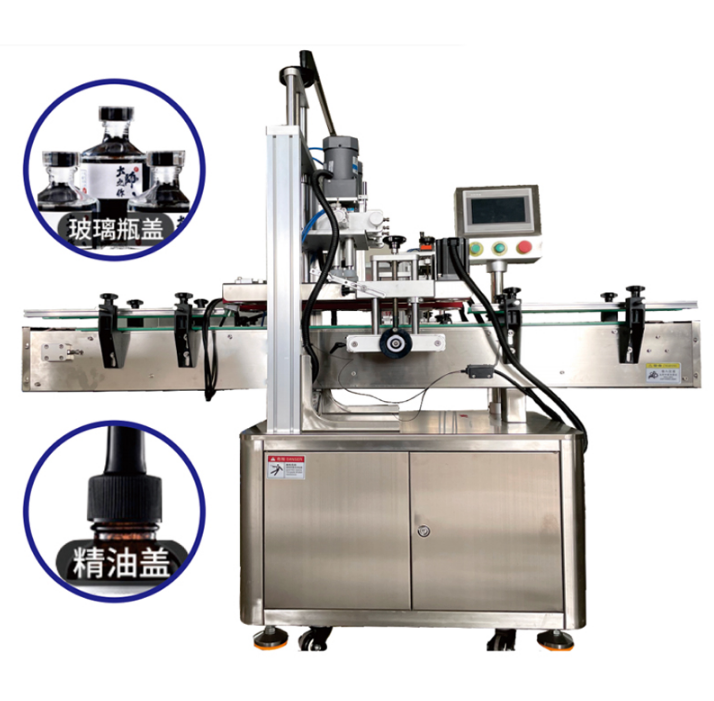
Beyond the Lid: What Vacuum Sealing Actually Does
Glass jars have been a packaging staple for over a century. They are inert, transparent, and endlessly recyclable. But the lid—that modest piece of metal or plastic—determines whether the product inside stays fresh for weeks or for years. A standard capping machine applies torque and calls it done. A vacuum sealing capping machine does something fundamentally different: it removes the air before sealing the jar, creating an environment where spoilage organisms struggle to survive.
The difference is not subtle. A pickle packer in the Pacific Northwest ran a comparison between their standard capper and a vacuum sealer on the same production line. Identical recipe, same glass jars, same storage conditions. After six months, the standard-capped jars showed visible discoloration and off-odors in 23% of samples. The vacuum-sealed jars? Zero failures. Every single one remained intact.
Oxygen Removal and Shelf Life Extension
The science behind vacuum sealing is straightforward: oxygen drives degradation. Oxidation causes color changes in fruits and vegetables, rancidity in oils and fats, and vitamin loss in nutritional products. Aerobic bacteria and mold require oxygen to grow. Remove the oxygen, and you slow down all of these processes simultaneously.
Modern vacuum capping systems achieve oxygen reduction rates exceeding 95% in the jar headspace. That is not a small margin. The residual oxygen level drops from roughly 21% in ambient air to under 1% after a proper vacuum seal. The impact on shelf life varies by product, but documented extensions range from 30% to 80% depending on the food type.
For a product like jam, which typically relies on sugar content and acidity for preservation, vacuum sealing adds an additional layer of protection. One commercial jam producer reported extending their best-by date from 18 months to 30 months after switching to vacuum capping. That is a full year of additional shelf life without changing the recipe, the jar, or any other variable.
Product Quality Preservation
Shelf life is one thing. Quality is another. A product that remains safe to eat but looks or tastes different is still a failure in the consumer's eyes. Vacuum sealing preserves sensory attributes that standard capping cannot protect.
Color retention is a prime example. Sliced fruits, tomato-based products, and pickled vegetables all suffer from browning or fading when exposed to oxygen. The vacuum environment locks in the original color far longer. A salsa manufacturer in Texas switched to vacuum sealing and found their product retained its bright red color for the full 24-month shelf life, whereas previously the color had begun dulling at 12 months.
Flavor stability follows the same pattern. Volatile aroma compounds are sensitive to oxidation. Once those compounds break down, the product tastes flat or develops off-notes. Vacuum sealing minimizes the oxidation pathway, keeping the flavor profile intact from the day of production to the day the consumer opens the jar.
Texture also benefits. Oxygen exposure can cause softening in crisp vegetables or hardening in certain sauces. The anaerobic environment created by vacuum sealing slows these textural changes significantly.
Container Integrity and Seal Reliability
A vacuum seal does more than remove oxygen—it also provides a reliable indicator of package integrity. A properly vacuum-sealed jar has a concave lid that audibly pops when opened. Consumers recognize this as a freshness signal. More importantly, it gives producers a non-destructive quality check. If the lid is flat or convex, the vacuum was lost at some point, and the product should be inspected.
The sealing mechanism itself is engineered for consistency. Vacuum capping machines use a chamber or a vacuum nozzle to evacuate air from the jar headspace before applying the cap. The cap is then tightened while the vacuum is maintained, ensuring that the seal is established under negative pressure. This sequence prevents the common problem of "false seals"—where the cap appears tight but the jar is not actually sealed against the atmosphere.
For glass jars with twist-off caps, the vacuum also helps the cap stay in place. The external atmospheric pressure pushes down on the cap, creating a mechanical lock that resists loosening during transport and handling. This is particularly valuable for products shipped over long distances or through distribution channels with significant temperature and pressure changes.
Operational Benefits on the Production Line
From a production standpoint, vacuum sealing capping machines integrate into existing lines with minimal disruption. They replace standard cappers at the capping station but use the same conveyor systems and bottle handling equipment. The vacuum generation equipment—typically a rotary vane pump or a venturi system—requires a utility connection but operates continuously with low maintenance demands.
Cycle times are comparable to standard capping. The vacuum evacuation and sealing sequence adds a few seconds per jar, but the difference is negligible on most production lines. For operations running 30 to 60 jars per minute, the throughput impact is under 5%.
One often-overlooked benefit is the reduction in product returns. Spoilage-related returns are a significant cost for food producers. Vacuum sealing dramatically reduces spoilage rates, which means fewer customer complaints, fewer chargebacks from retailers, and less waste in the supply chain. A specialty sauce company in the Northeast reduced their annual return rate from 4.2% to 0.7% within a year of installing a vacuum capper—saving over $120,000 in product replacement and logistics costs alone.
Material Compatibility and Container Selection
Vacuum sealing works with most glass jar formats—wide-mouth, narrow-neck, round, square—as long as the closure system is designed for vacuum applications. Twist-off caps with plastisol liners are the most common, but press-on twist-off caps and continuous-thread closures can also be used with appropriate sealing gaskets.
The critical factor is the cap liner material. It must be able to form an effective seal under vacuum conditions and maintain that seal over the product's shelf life. Plastisol liners are the industry standard because they flow and conform to the jar rim during the sealing process, creating a custom fit for each jar. This adaptability makes vacuum sealing suitable for a wide range of jar finishes without requiring custom tooling.
Glass jars themselves are ideal for vacuum sealing because the rigid container does not collapse under vacuum pressure. Flexible packaging would deform, but glass maintains its shape, providing a stable platform for the sealing mechanism. This rigidity also means the vacuum level is consistent from jar to jar, unlike flexible pouches where the vacuum level depends on how much the package collapses.
Limitations Worth Mentioning
Vacuum sealing is not a universal solution. Products with high water activity and low acidity still require refrigeration or additional preservation methods—vacuum alone does not eliminate the need for proper thermal processing or refrigeration. Products that continue to outgas after sealing, such as certain fermented foods, can lose vacuum over time as internal pressure builds.
The equipment cost is also higher than standard capping. The vacuum pump, control system, and sealing chamber add capital expense. For low-volume operations or products with short shelf life requirements, the investment may not be justified. But for any product where shelf life, quality preservation, or reduced returns matter, the economics tilt in favor of vacuum sealing.
The choice of a vacuum sealing capping machine for glass jars is not about chasing the latest technology. It is about recognizing that oxygen is the enemy of product quality and doing something effective about it. Manufacturers like BestPropak offer vacuum capping solutions designed for integration into existing lines, helping producers extend shelf life, preserve quality, and reduce returns without overhauling their entire packaging operation.